
Red Lava Rock Calculator
— How Much Do You Need?
Accurate Red Lava Rock calculator — estimate cubic yards or tons for beds, paths, planters, and decorative landscaping.
How to Use This Red Lava Rock Calculator
Planning a red lava rock project requires precise measurements to ensure you order enough material without overspending.
- 1 Enter Dimensions — Input the length and width of your area in feet. Round up slightly for a buffer.
- 2 Choose Depth — Select the depth in inches. For most red lava rock projects, 3–6 inches is standard.
- 3 Review Results — Instantly see cubic yards and tons needed to accurately plan your order.
Visual Area Guide
Use these diagrams to measure your project area correctly.
Rectangular Area
Measure length × width for square or rectangular areas. Most driveway, patio, and grading projects use this method.
Circular Area
Measure the radius (half the diameter) for round beds, drain fields, or circular landscaping. Formula: π × radius².
Material Coverage & Grading
Common red lava rock (scoria) grades by nominal particle size, used in landscaping, drainage, and erosion control applications
| Grade | Application |
|---|---|
| 3/4" | Smallest standard decorative grade of red lava scoria, featuring uniform pea-sized angular particles approximately 19 mm in diameter. Ideal for landscape beds, tree rings, and shrub borders as a lightweight mulch alternative. Provides effective weed suppression and moisture retention while maintaining open drainage. Washed and screened to minimize fines. |
| 1" | Mid-size general-purpose red lava rock grade with nominal 1-inch angular particles offering slightly larger void spaces than the 3/4-inch grade. Commonly used in landscape borders, decorative ground cover, and light drainage applications around foundations and garden structures. Its porous texture and low bulk density (40–50 lbs/ft³) make it a practical mulch substitute. Suitable for both aesthetic and light functional drainage roles. |
| 1-2" | Largest practical red lava scoria grade, classified within the sub-4-inch open-graded drainage rock category. Maximizes porosity and permeability for superior drainage performance in septic fields, retaining wall backfill, and water filtration systems. Angular, rough-textured particles interlock loosely to maintain high void ratios without compacting. Aligns with Caltrans Class 1/2 permeable drain rock specifications. |
| Drain Rock | Open-graded, clean-washed red lava scoria sized for permeable drainage systems, typically encompassing the 1-inch to 2-inch range meeting ASTM F2301 and Caltrans permeable aggregate standards. Specified for French drains, leach fields, parking lot stabilization, and erosion control structures where high infiltration rates are critical. Durability index ≥40 and compressive strength >5,000 PSI post-crushing ensure structural adequacy in drainage trenches. Free of plastic fines and clay-sized particles. |
| Nursery Rock | Bagged decorative grade of red lava rock, typically in the 3/4-inch to 1-inch size range, packaged and marketed through garden centers and nurseries for residential landscaping use. Applied as ornamental ground cover in planting beds, container gardens, and xeriscaping projects due to its striking red color and lightweight character. Neutral to slightly acidic pH (6.5–7.5) makes it compatible with most ornamental plants. Non-combustible and heat-resistant, suitable for fire-wise landscaping in fire-prone regions. |
| Red Scoria | Broader classification encompassing all nominal sizes of red lava rock used as lightweight volcanic aggregate for soil amendment, erosion control, and non-structural fills. Composed of iron-rich silicates (pyroxenes and olivine) oxidized to a deep red to reddish-brown color, consistent with ASTM C294 descriptive nomenclature for volcanic constituents. Low bulk density and high internal void structure make it unsuitable as a standalone structural base but effective when blended into growing media or used in open-graded erosion control blankets. Widely referenced in Western U.S. aggregate catalogs as 'Basalt Scoria' or 'Red Volcanic Rock.' |
Plan Your Next Project
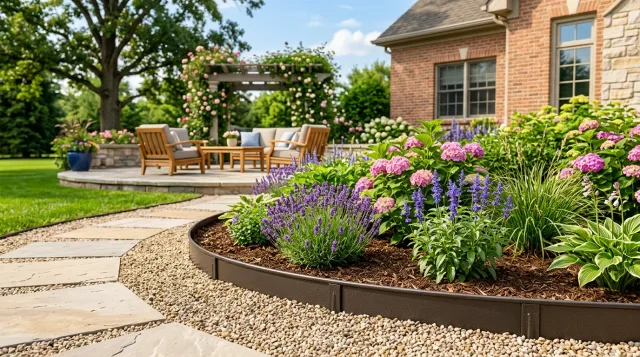
Landscape Edging Calculator
Edging calculator — estimate pieces, rolls, or linear feet for your bed perimeter. Supports metal, plastic, stone, and wood edging types.
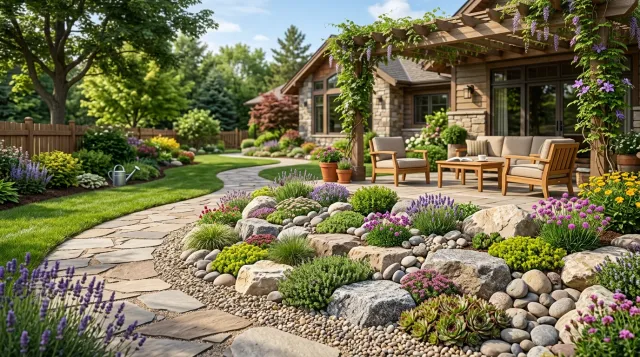
Rock Garden Calculator
Rock garden calculator — estimate how many tons of decorative rock your garden needs. Select stone type, enter bed dimensions, and get coverage totals.
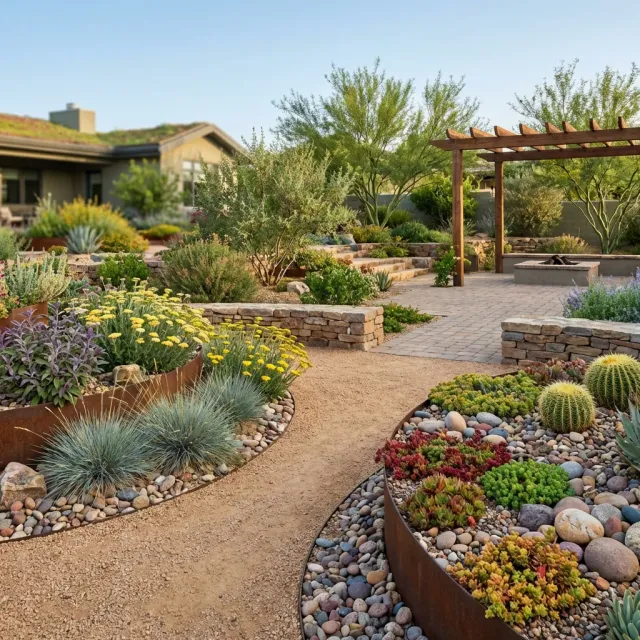
Xeriscaping Calculator
Xeriscaping calculator — estimate rock tonnage for drought-tolerant beds. Input coverage area and desired depth to see cubic yards, tons, and cost.
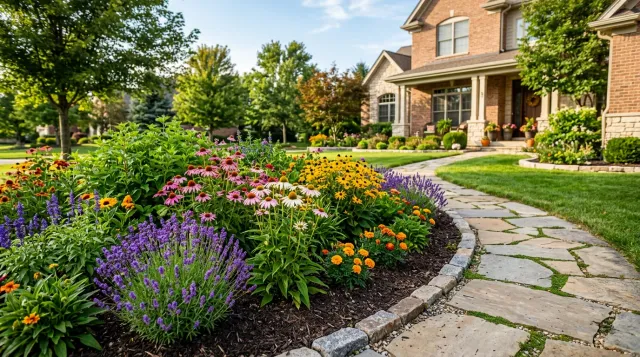
Flower Bed Calculator
Flower bed calculator — estimate how much soil or mulch your bed requires. Enter length, width, and depth for results in cubic feet, yards, and bags.
Frequently Asked Questions
What is red lava rock, and where does it come from?
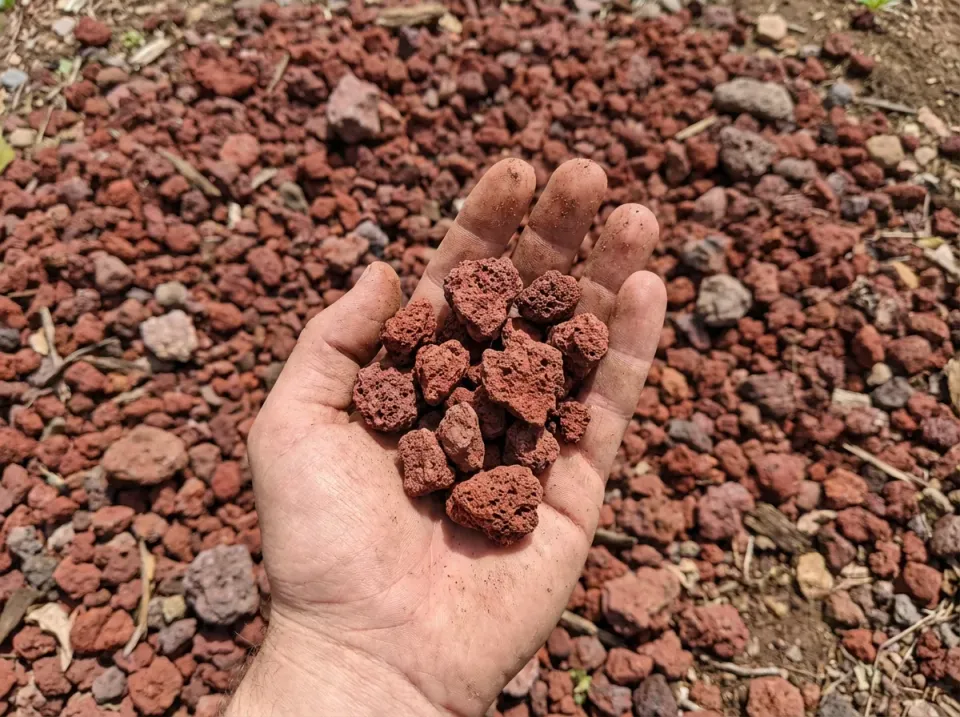
Red lava rock is a natural volcanic stone that forms when molten lava flows from a volcano, cools rapidly, and hardens into solid rock. As the lava cools, dissolved gases escape through the material and leave behind a highly porous structure. That is what gives lava rock its distinctive lightweight texture. The vivid red color comes from iron oxide, the same compound responsible for rust, which forms as the iron-rich basalt oxidizes during and after cooling. Hello Gravel delivers red lava rock in bulk by the truckload, so you can get the volume you need delivered right to your site.
What are the main benefits of using red lava rock in landscaping?
Red lava rock offers a combination of practical performance and visual appeal that makes it one of the most versatile decorative ground cover options available. Because the stone is so porous, it drains surface water quickly rather than allowing it to pool on the surface. That same porous structure also slows evaporation from the soil below, helping the ground retain moisture longer between waterings — so while water drains freely through the rock layer, less moisture is lost from the soil beneath it. Red lava rock also acts as a natural insulator for the soil. It absorbs heat from the sun during the day and releases it slowly at night, which can help moderate soil temperature and even extend the growing season in cooler climates. This thermal quality is especially valuable in xeriscape designs and drought-tolerant gardens. Unlike wood mulch or bark, lava rock does not decompose. It will not rot, attract termites, compact into the soil, or need replacing every season. A well-installed layer of red lava rock should continue performing for many years with very little upkeep. Finally, because red lava rock is significantly lighter than most decorative stones, a single truckload from Hello Gravel covers more ground per ton than denser materials like crushed granite or river rock. That means fewer loads and better value on larger projects.
Is red lava rock safe to use around plants and trees?
For the vast majority of landscape plants, yes. Red lava rock is generally considered safe and even beneficial when used as a ground cover around shrubs, trees, perennials, and ornamental plantings. The open, porous structure of the rock allows water and air to pass freely through the layer and reach the soil and roots below. It suppresses weed germination, which reduces competition for nutrients, and it helps stabilize soil temperature, which most plants appreciate. One thing worth keeping in mind is soil pH. Red lava rock is typically pH neutral to very mildly alkaline. That suits the vast majority of common landscape plants without any issues. However, if you are growing acid-loving plants like azaleas, blueberries, or rhododendrons, it is a good idea to test your soil pH periodically. Any rock-based ground cover can subtly influence soil chemistry over time, so staying informed about your soil conditions will help you keep those plants healthy. Also worth noting: because lava rock absorbs and holds solar heat, it can raise the temperature of the soil around it. That is a benefit in most settings, but in extremely hot climates or in areas with heat-sensitive plants, it is something to factor into your placement decisions. If you are working with a specific plant type or a more complex garden design, a local nursery or landscape professional can give you advice tailored to your region and species.
How much red lava rock do I need, and what depth should I apply it at?
The right depth depends on your project goals. For decorative landscaping, weed suppression, and moisture retention in garden beds, a depth of 2 to 3 inches is the standard recommendation. That is enough to block weed germination and slow evaporation from the soil without being so deep that it creates drainage or root aeration problems. For fire pit fill or decorative fire features, a layer of 3 to 4 inches is more typical, though the specifics depend on the size and design of the feature. Because red lava rock is much lighter than denser stones, a ton of lava rock covers more area than a ton of heavier materials. At 2 inches deep, one ton of red lava rock covers approximately 200 to 240 square feet. At 3 inches deep, that same ton covers roughly 130 to 160 square feet. These figures are based on typical lava rock density and can vary slightly depending on particle size and source. The most accurate way to figure out exactly how many tons you need is to use the Hello Gravel calculator on this page. Enter your area dimensions and your target depth, and the calculator will give you a reliable tonnage estimate for your specific project. It takes about a minute and saves you from over-ordering or running short.
What size red lava rock works best for different projects?
Red lava rock is most commonly available in sizes ranging from about 3/4 inch up to 1.5 inches, and the right choice comes down to the look you want and how the rock will be used. Smaller sizes around 3/4 inch create a finer, more uniform surface that looks polished in garden beds, planting borders, and around the base of shrubs or ornamental grasses. The pieces nestle together more closely, which can improve weed suppression and give the area a tidy, intentional appearance. Larger sizes in the 1 to 1.5 inch range have a bolder, more rugged look. They work well along pathways, around trees, in xeriscape and desert-themed landscapes, and as fill material in fire pits and outdoor fire features. Larger rock also tends to stay in place more reliably in areas with slight slopes, moderate foot traffic, or surface water runoff after rain. When you place your order through Hello Gravel, you can select the size that fits your project. If you are not sure which option is the right call, reach out to our team and we will help you narrow it down based on your specific application and aesthetic.
Other Material Calculators
Delivery Logistics & Truck Info
Know your delivery options and access requirements before scheduling your order.
Truck Capacities
- Standard Dump Truck 10–14 tons
- Tandem Axle 14–18 tons
- Semi End Dump 20–25 tons
A standard cubic yard weighs approximately 2,000–2,700 lbs depending on material and moisture.
Site Access Requirements
- Trucks require a minimum 12-ft wide, overhead-clear access path
- Soft ground or slopes over 10% may limit truck access — contact us before ordering
- Ensure no underground utilities or irrigation lines are in the drop zone
- Mark your desired drop location clearly before delivery
Important Notes
- Delivery estimates are based on available inventory and route proximity
- Minimum order quantities apply — typically 5 cubic yards or 1 truckload
- Material certification is available upon request for permitted projects
- Always confirm local grading ordinances before major material placement