
Recycled Asphalt Calculator
— How Much Do You Need?
Estimate Recycled Asphalt tons, cubic yards, coverage and material cost with this calculator.
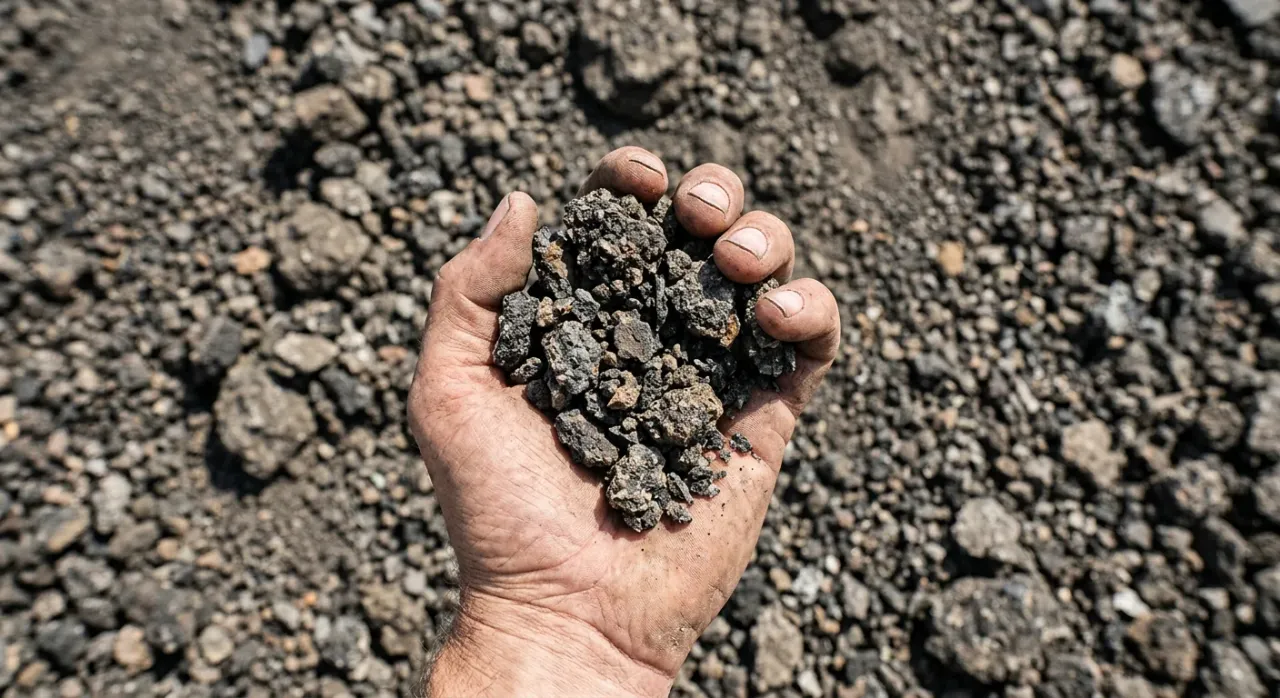
How to Use This Recycled Asphalt Calculator
Planning a recycled asphalt project requires precise measurements to ensure you order enough material without overspending.
- 1 Enter Dimensions — Input the length and width of your area in feet. Round up slightly for a buffer.
- 2 Choose Depth — Select the depth in inches. For most recycled asphalt projects, 3–6 inches is standard.
- 3 Review Results — Instantly see cubic yards and tons needed to accurately plan your order.
Visual Area Guide
Use these diagrams to measure your project area correctly.
Rectangular Area
Measure length × width for square or rectangular areas. Most driveway, patio, and grading projects use this method.
Circular Area
Measure the radius (half the diameter) for round beds, drain fields, or circular landscaping. Formula: π × radius².
Material Coverage & Grading
Common recycled asphalt pavement (RAP) classifications by processing method and application
| Grade | Application |
|---|---|
| Milled RAP | RAP obtained directly from milling or cold planing of existing asphalt pavement surfaces. Consists of asphalt-coated angular aggregate particles with residual binder intact. Best suited for reprocessing into hot mix asphalt or use as unbound base material. Gradation is controlled by milling drum configuration, typically with a 1-inch maximum particle size. |
| Plant RAP | Reclaimed asphalt material recovered from asphalt plant operations, including rejected mix and stockpiled cuttings. Generally more uniform in gradation and asphalt content than milled RAP due to controlled plant conditions. Preferred for hot mix recycling applications where consistency in binder content is critical. Often blended with milled RAP to optimize mix design. |
| Coarse RAP | The larger-particle fraction of processed RAP, separated to improve quality control in hot mix plant operations. Angular, asphalt-coated particles provide good interlock and structural support. Used in base course hot mix applications and unbound structural base layers. Requires careful blend design to account for stiffened residual binder in mix formulations. |
| Fine RAP | The smaller-particle fraction of processed RAP, rich in fines and residual asphalt binder. Influences gradation, workability, and binder contribution in recycled hot mix applications. Used in surface and intermediate course hot mix blends where fine gradation is specified. Fines content must be monitored to remain below 5% passing the No. 200 sieve for drainage-sensitive applications. |
| Base RAP | Processed RAP used as an unbound granular base or subbase material without hot mixing. Relies on residual asphalt binder and particle interlock for structural cohesion and compaction stability. Suitable for base and subbase construction under wearing courses in both new pavement and rehabilitation projects. Compaction is verified with nuclear density gauges using correction factors for asphalt content. |
| CIR | Cold In-Place Recycling material using 100% of the existing pavement processed and treated in-situ with emulsified asphalt recycling agents. No material is removed from the roadway; the existing pavement is scarified, mixed with recycling agent, and recompacted. Used for pavement preservation and rehabilitation where structural integrity of the existing base is sufficient. Quality control includes extraction testing per ASTM D2172 to verify gradation, asphalt content, and binder properties. |
Plan Your Next Project
Driveway Calculator
Driveway calculator — estimate cubic yards and tons from your length, width, and preferred gravel depth. Covers single-layer and three-layer builds.
Gravel Driveway Calculator
Gravel driveway calculator — estimate how many cubic yards or tons your driveway needs. Enter length, width, and depth for volume per layer.
Parking Pad Calculator
Parking pad calculator — estimate crushed stone or gravel for a residential pad. Enter area and depth for cubic yards, tons, and approximate cost.
RV Pad Calculator
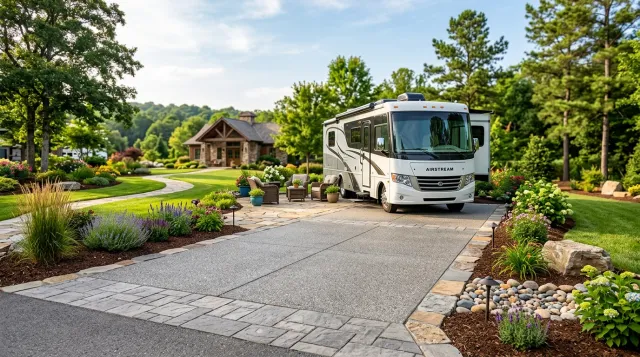
RV pad calculator — estimate how much gravel and base material your pad requires. Input dimensions and a recommended 6-inch depth for tonnage and yardage.
Frequently Asked Questions
What exactly is recycled asphalt, and where does it come from?
Recycled asphalt, also called asphalt millings or reclaimed asphalt pavement (RAP), comes from old roads, parking lots, and driveways that are being repaved or torn out. A milling machine grinds the top layer of existing pavement into small chunks, which are then collected and put back to use instead of ending up in a landfill. The material you receive is a mix of crushed asphalt pieces and the residual bitumen binder that held the original pavement together. That leftover binder is what makes recycled asphalt so useful. It gives the material properties that plain gravel simply does not have. It can soften slightly in heat and re-bind over time, which means a properly installed surface gradually firms up and coheres rather than staying loose indefinitely. If you are looking for an affordable, durable, and environmentally responsible surface material, recycled asphalt is worth serious consideration.
Is recycled asphalt a good choice for a driveway?
For most residential driveways, recycled asphalt is an excellent choice. Once it is properly graded and compacted, it creates a stable, semi-paved surface that handles regular vehicle traffic well. It resists the rutting and scattering that loose gravel driveways are known for, and it holds up well through freeze-thaw cycles because it has some flexibility rather than the rigidity of poured concrete. The surface also improves over time. As heat and traffic work the residual binder, the millings fuse together into a more cohesive layer that looks and behaves closer to a paved surface. You get a cleaner appearance than gravel without the cost of fresh asphalt or concrete. It works just as well for parking pads, rural access roads, and unpaved paths where a stable, low-maintenance surface is the goal. If you are comparing your options, recycled asphalt consistently offers one of the best combinations of performance and value for these kinds of applications.
Does recycled asphalt harden over time?
Yes, and this is one of the most distinctive things about the material. Recycled asphalt contains residual bitumen, the same sticky binder used in fresh asphalt pavement. When the sun heats the surface and vehicle tires roll over it repeatedly, that binder reactivates and causes the millings to fuse together. Over weeks and months, the surface goes from loose, gravelly material to a firm, cohesive layer that feels more like a paved road than a gravel drive. Unlike loose gravel, which stays loose indefinitely, recycled asphalt hardens over time through this bitumen reactivation, a process that is unique to asphalt-based materials. For best results, apply the material in layers and compact each layer thoroughly with a plate compactor or roller before the next layer goes down. Good compaction at installation dramatically speeds up the binding process and gives you a more even, stable finish right away.
How long does a recycled asphalt driveway last?
A well-installed recycled asphalt driveway can realistically last 20 to 30 years. The longevity depends heavily on how the job is done at the start. Proper sub-base preparation, adequate compacted depth, and thorough compaction during installation are the three biggest factors. If you skip any of those steps, you will see loose areas, soft spots, and ruts develop much sooner than they otherwise would. Laying at least 3 to 4 inches of compacted depth is the standard recommendation for driveways with regular passenger vehicle traffic. Heavier vehicles or higher traffic volumes may warrant more. Once the surface has fully cured, applying a sealcoat every few years can protect the binder from UV degradation and water intrusion, extending the lifespan further. With basic upkeep, recycled asphalt is genuinely a long-term surface solution rather than a short-term fix.
How much recycled asphalt do you need, and how far does one ton go?
The amount you need depends on the square footage of your project and your target compacted depth. For a residential driveway, 3 to 4 inches of compacted recycled asphalt is the most widely recommended depth. As a practical rule of thumb, 1 ton covers approximately 130 to 135 square feet at 2 inches of compacted depth, or roughly 65 to 70 square feet at 4 inches of compacted depth. Keep in mind that material compresses during compaction, so these figures already account for settling. To put that in perspective, a single-car driveway that is 10 feet wide and 50 feet long is 500 square feet. At 4 inches of compacted depth, that project would require approximately 12 to 13 tons. A standard two-car driveway or a longer rural access road will need considerably more, often a full truckload or multiple loads depending on the size. These are reasonable estimates for planning purposes, but your specific dimensions and site conditions will affect the final number. The Hello Gravel calculator is the fastest way to get a precise quantity estimate for your project. Enter your length, width, and depth, and it will tell you exactly how much to order.
Other Material Calculators
Delivery Logistics & Truck Info
Know your delivery options and access requirements before scheduling your order.
Truck Capacities
- Standard Dump Truck 10–14 tons
- Tandem Axle 14–18 tons
- Semi End Dump 20–25 tons
A standard cubic yard weighs approximately 2,000–2,700 lbs depending on material and moisture.
Site Access Requirements
- Trucks require a minimum 12-ft wide, overhead-clear access path
- Soft ground or slopes over 10% may limit truck access — contact us before ordering
- Ensure no underground utilities or irrigation lines are in the drop zone
- Mark your desired drop location clearly before delivery
Important Notes
- Delivery estimates are based on available inventory and route proximity
- Minimum order quantities apply — typically 5 cubic yards or 1 truckload
- Material certification is available upon request for permitted projects
- Always confirm local grading ordinances before major material placement