
Black Dirt Calculator
— How Much Do You Need?
Estimate black dirt in cubic yards, tons, or truckloads—accurate amounts for landscaping projects.
How to Use This Black Dirt Calculator
Planning a black dirt project requires precise measurements to ensure you order enough material without overspending.
- 1 Enter Dimensions — Input the length and width of your area in feet. Round up slightly for a buffer.
- 2 Choose Depth — Select the depth in inches. For most black dirt projects, 3–6 inches is standard.
- 3 Review Results — Instantly see cubic yards and tons needed to accurately plan your order.
Visual Area Guide
Use these diagrams to measure your project area correctly.
Rectangular Area
Measure length × width for square or rectangular areas. Most driveway, patio, and grading projects use this method.
Circular Area
Measure the radius (half the diameter) for round beds, drain fields, or circular landscaping. Formula: π × radius².
Material Coverage & Grading
Common black dirt grades and landscaping applications
| Grade | Application |
|---|---|
| Screened | Black dirt processed through a 1/2- to 1-inch mesh screen to remove rocks, roots, and debris, producing a uniform, fine-textured topsoil. High in organic matter (typically 5–10% per ASTM D5268 guidelines) with balanced sand, silt, and clay for excellent moisture retention and nutrient holding. Ideal for lawns, garden beds, topdressing, and sod installation where a smooth, workable surface is required. |
| Unscreened | Raw, field-run black dirt that retains natural inclusions such as small rocks, root fragments, and clods. Coarser in texture than screened grades and lower in processing cost, making it suitable for bulk landscaping fill, rough grading, and areas where surface finish is not critical. Organic content remains high but consistency is variable. |
| Premium | High-organic black dirt with 8–12% organic matter content, typically double-screened through a 1/2-inch mesh for maximum fineness and uniformity. Richest nutrient profile of common black dirt grades, supporting intensive planting applications such as vegetable gardens, flower beds, and sod farms. Commands a higher price due to selective sourcing and additional processing. |
| Black Loam | A regionally recognized grade common in Midwest glacial areas, blending black dirt with balanced loam proportions (sand, silt, and clay near equal thirds per the USDA Soil Texture Triangle). Organic content is moderate (15–20%) with improved structural consistency over pure black dirt, reducing settling. Well suited for lawn establishment, berms, planters, and general landscaping where a stable yet fertile growing medium is needed. |
| Organic Fill | A utility-grade black dirt used primarily to fill low areas, depressions, and non-structural voids where plant establishment is the end goal. Organic matter is present but grade quality is less controlled than screened or premium grades; particle size may include fines and minor debris. Suitable for filling behind landscape walls, around tree installations, and in naturalized areas where fertility matters more than uniformity. |
Plan Your Next Project
Raised Garden Bed Calculator
Raised bed calculator — estimate how much soil, compost, and amendments to buy for any bed shape. Enter dimensions for results in cubic feet and bags.
Berm Calculator
Berm calculator — estimate fill dirt or soil volume for a landscape berm. Enter base width, height, and length for cubic yards and proper grading.
Flower Bed Calculator
Flower bed calculator — estimate how much soil or mulch your bed requires. Enter length, width, and depth for results in cubic feet, yards, and bags.
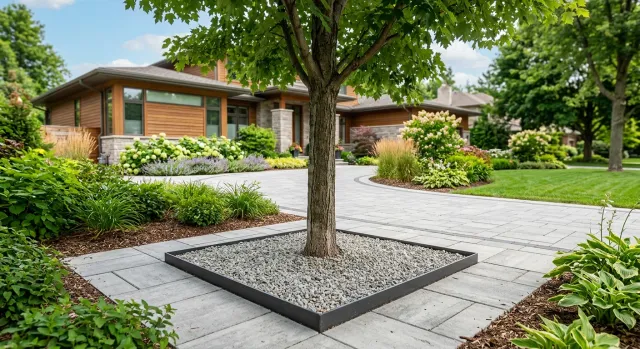
Tree Well Calculator
Tree well calculator — estimate mulch volume based on trunk diameter, ring width, and desired depth. Results in cubic feet, yards, and bags.
Frequently Asked Questions
What is black dirt, and is it the same as topsoil?
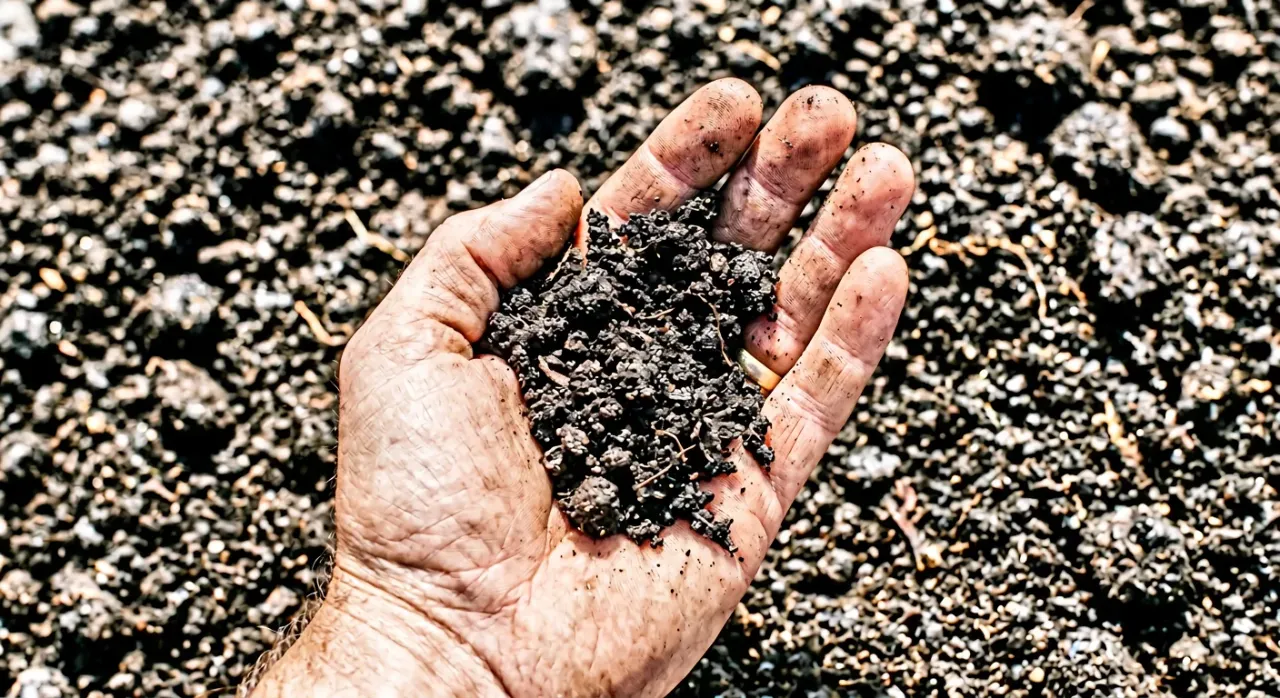
Black dirt and topsoil are terms that are widely used interchangeably, and in most cases they describe the same general material: the dark, nutrient-rich upper layer of earth that forms as organic matter breaks down over time. That dark color comes from decomposed organic material called humus, which gives the soil its richness and its characteristic appearance. When you order black dirt from Hello Gravel, you are getting bulk topsoil delivered by the truckload — fertile material well suited for growing grass, planting gardens, and building up the surface layer of your yard. Composition can vary slightly by region and source, so if you have specific requirements for your project the Hello Gravel team is happy to talk through what you will be receiving before you place your order.
Is black dirt actually good for my lawn and garden?
Yes, and the dark color is your first clue as to why. That rich, almost black appearance signals high organic content, which means the soil holds moisture well, drains without becoming waterlogged, and provides nutrients that support healthy root development. For lawns, spreading a fresh layer of black dirt gives grass seed a strong foundation to establish and fill in. For vegetable gardens or flower beds, it creates loose, workable soil that roots can penetrate easily. That said, quality can vary depending on the source. Some loads carry more clay or sand than others, and in certain situations you may want to mix in compost or other amendments to get the best results for a specific use. If you are not sure whether straight black dirt is the right call for your project, the Hello Gravel team is happy to help you think it through before you place your order.
What projects is black dirt best suited for?
Black dirt is the right material for any project where you need fertile, plant-friendly soil. The most common uses are establishing new lawns from seed or sod, repairing bare or patchy spots in an existing yard, filling and leveling low areas, building out garden beds and raised growing areas, and topdressing landscaped zones to boost soil quality over time. It is also frequently used around new construction sites where the original topsoil was stripped away during grading. In those situations, the ground underneath is often compacted subsoil that simply will not support healthy turf on its own. Bringing in black dirt by the truckload restores that growing layer and gives you a realistic starting point for a healthy lawn or landscape. If you are starting from scratch or trying to get a struggling lawn to perform better, black dirt is one of the most straightforward and cost-effective ways to make a real difference.
How much black dirt do I need, and how deep should I apply it?
The right amount depends on your project dimensions and your target depth. For lawns, a depth of 3 to 4 inches is typically enough to give grass seed or sod a healthy growing layer. For vegetable gardens or dedicated planting beds, going 6 to 8 inches deep gives roots more room to develop and gives you a better long-term result. As a practical starting point, one cubic yard of black dirt covers approximately 100 square feet at 3 inches deep, or about 54 square feet at 6 inches deep. Keep in mind that black dirt can settle slightly after delivery and after rain, so it is worth planning for a little extra rather than coming up short. Because every project has different dimensions, the most accurate way to figure out how much you need is to use the Hello Gravel calculator. Enter your square footage and your target depth, and it will give you a reliable estimate so you can order the right amount the first time.
What is the difference between black dirt and fill dirt?
These two materials serve very different purposes, so it is worth knowing which one your project actually calls for before you order. Black dirt is the organic, nutrient-rich upper layer of soil. It is dark in color, holds moisture, and is designed to support plant and grass growth. Fill dirt is subsoil, the layer that sits beneath the topsoil. It is lighter in color, contains little to no organic matter, and is used for structural purposes like filling in holes, correcting grade levels, or building up low areas where you are not planning to grow anything. A common and cost-effective approach for larger grading projects is to use fill dirt for the bulk of the build-up work, then finish with a layer of black dirt on top to create the final growing surface. If you are raising a large section of yard by a foot or more, this two-layer method saves you money by using fill dirt where plant nutrition does not matter, while still giving you the fertile topsoil you need at the surface. Hello Gravel carries both materials, so you can order them as part of the same project.
Other Material Calculators
Delivery Logistics & Truck Info
Know your delivery options and access requirements before scheduling your order.
Truck Capacities
- Standard Dump Truck 10–14 tons
- Tandem Axle 14–18 tons
- Semi End Dump 20–25 tons
A standard cubic yard weighs approximately 2,000–2,700 lbs depending on material and moisture.
Site Access Requirements
- Trucks require a minimum 12-ft wide, overhead-clear access path
- Soft ground or slopes over 10% may limit truck access — contact us before ordering
- Ensure no underground utilities or irrigation lines are in the drop zone
- Mark your desired drop location clearly before delivery
Important Notes
- Delivery estimates are based on available inventory and route proximity
- Minimum order quantities apply — typically 5 cubic yards or 1 truckload
- Material certification is available upon request for permitted projects
- Always confirm local grading ordinances before major material placement