
Best Ground Cover for Dog Runs: Pea Gravel, Marble Chips, Wood Chips, and More
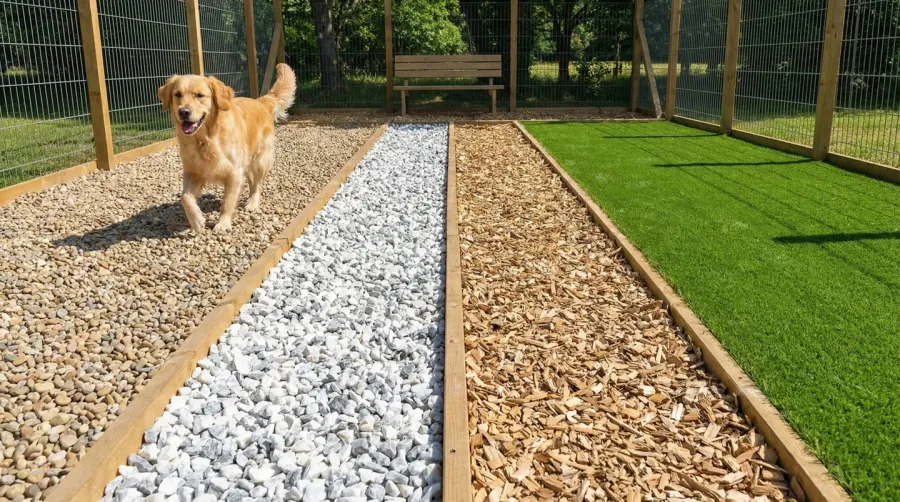
Creating the perfect dog run starts with choosing the right ground cover. If you’re tired of dealing with muddy paws, smelly kennels, or worn-out grass where your dog plays, you’re not alone. The surface material you choose can solve these problems while keeping your pet safe and comfortable.
Yes, marble chips can be used for dog runs, but they’re not always the most comfortable or safest choice for every dog. While they offer excellent durability and drainage, their angular shape can be harsh on paw pads compared to rounded alternatives like pea gravel.
Quick Answer: Pea gravel is often the top choice for most dog runs due to its comfort, drainage, and safety, but the best material depends on your dog’s size, habits, and your local climate.
In this guide, we’ll compare marble chips with other popular options including pea gravel, wood chips, artificial turf, and sand. You’ll learn how to choose based on your dog’s needs and get practical installation tips that ensure long-lasting results.
How to choose the best surface for your dog run
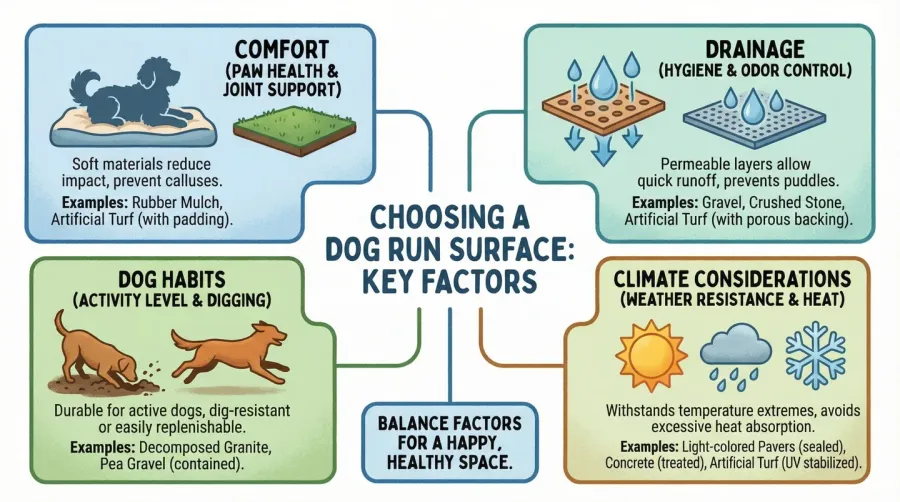
The right ground cover depends on several key factors that directly impact your dog’s comfort and your maintenance routine. Understanding these criteria helps you make a decision that works for both you and your pet.
Comfort and paw safety should be your top priority. Rounded materials like pea gravel are gentler on paw pads than sharp, angular stones. Consider your dog’s activity level and whether they’ll be running, playing, or just using the space for bathroom breaks.
Drainage and cleanliness determine how well the surface handles urine and rain. Materials that allow liquid to drain through, like gravel, stay cleaner and smell-free compared to surfaces that retain moisture.
Your dog’s habits matter significantly. Heavy diggers might destroy wood chip surfaces quickly, while dogs that chew everything need materials they can’t easily ingest. Some dogs simply refuse to walk on certain textures.
Climate plays a bigger role than many people realize. Light-colored stones can become scorching hot in direct sunlight, while organic materials like wood chips can develop mold in humid conditions.
Popular dog run ground cover options
Understanding your material choices helps you weigh the pros and cons of each option. Here’s what most dog owners consider when planning their runs.
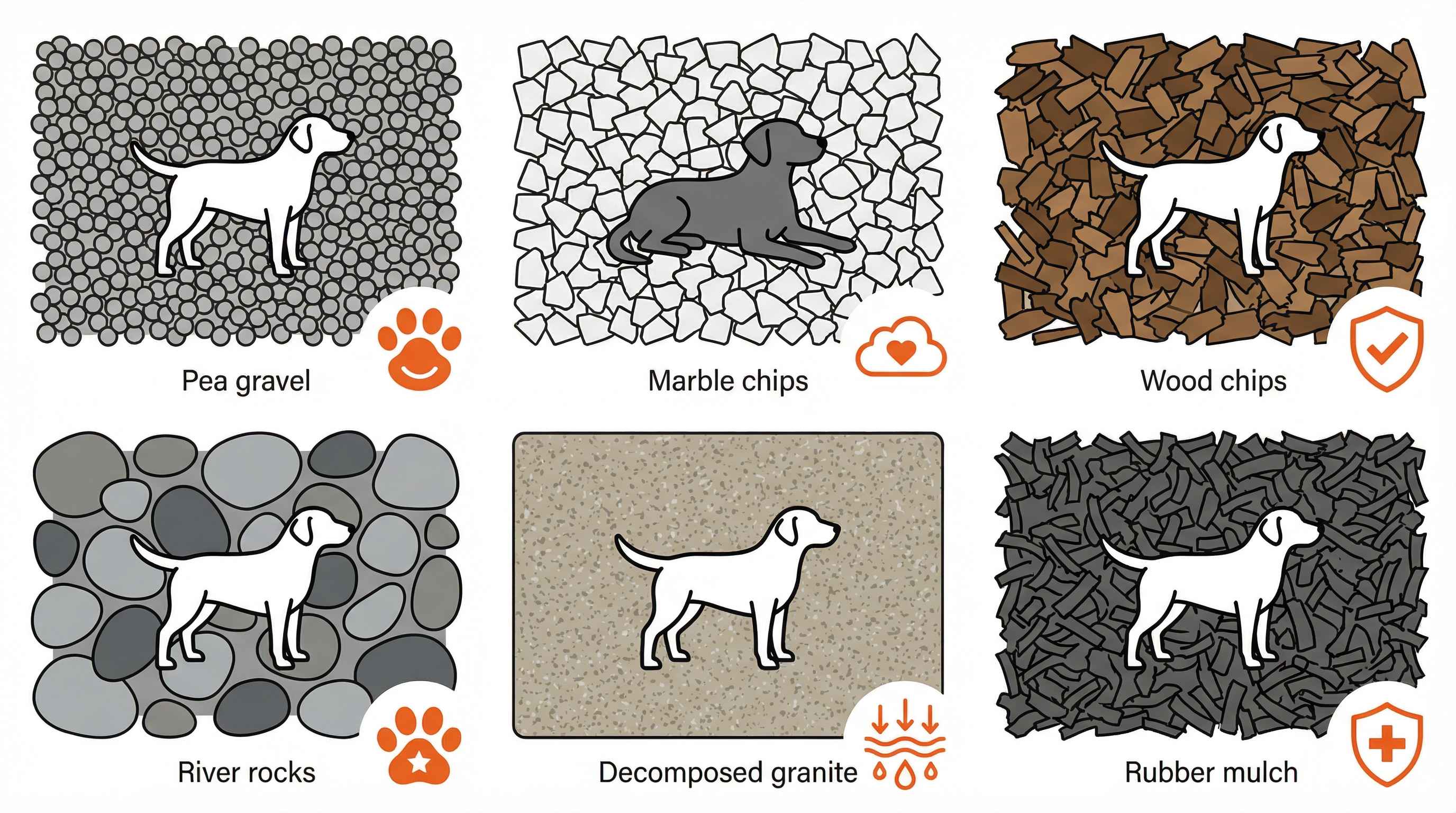
Pea gravel consists of small, naturally rounded stones that feel comfortable under paws. It drains exceptionally well and doesn’t decompose, making it a favorite among animal shelters and veterinarians. If you’re considering this option, learn more about using pea gravel for a shed foundation to understand its structural benefits.
Marble chips and crushed stone offer durability and aesthetic appeal but tend to be more angular than pea gravel. They work well for decorative borders or low-traffic areas within larger runs. For those interested in using marble chips in other outdoor projects, check out our guide on marble chips for fire pit areas.
Wood chips and mulch provide a soft, natural surface that many dogs enjoy. However, you must choose carefully since some mulches can be toxic to pets, and organic materials require regular replacement.
Artificial turf gives you the look of grass without the maintenance headaches. It stays clean and doesn’t create mud, though it can get hot and requires periodic deep cleaning.
Sand works for some situations but can retain odors and become a giant litter box. Play sand is safer than builder’s sand, which may contain harmful additives. For more information on sand applications, explore our article on sand as a base for playground equipment.
Safety Note: Always avoid cocoa bean mulch, eucalyptus mulch, and chemically treated wood products, as these can be toxic to dogs.
Are marble chips good for a dog run
Marble chips offer specific advantages but come with important considerations that might make them unsuitable for your particular situation.
What marble chips bring to the table includes exceptional durability and attractive appearance. They don’t decompose like organic materials, provide excellent drainage when properly installed, and require minimal long-term maintenance compared to wood chips or sand.
However, the downsides can be significant for active dogs. Marble chips are typically angular rather than rounded, which can be uncomfortable on paw pads during extended play sessions. They can also become quite hot in direct sunlight, potentially burning sensitive paw pads.
Size matters for safety. Smaller marble chips pose an ingestion risk if your dog tends to mouth or swallow objects. Unlike rounded pea gravel, angular chips can be more problematic if accidentally swallowed.
When marble chips make sense is primarily in decorative applications or perimeter areas around a main surface of pea gravel or artificial turf. They work well for owners who prioritize aesthetics and have dogs that use the space primarily for bathroom breaks rather than active play. If you’re considering marble chips for other landscaping projects, you might find our guide on marble chips for raised garden beds helpful.
For most active dog runs, pea gravel offers similar drainage benefits with better paw comfort and safety.
Pea gravel vs marble chips vs wood chips comparison
| Material | Comfort | Drainage | Maintenance | Cost | Best For |
|---|---|---|---|---|---|
| Pea Gravel | High (rounded) | Excellent | Low | Medium | Most dogs, active play |
| Marble Chips | Medium (angular) | Excellent | Low | Medium-High | Decorative areas |
| Wood Chips | High (soft) | Poor | High | Low | Gentle dogs, shaded areas |
| Artificial Turf | High | Good | Medium | High | Clean appearance priority |
Pea gravel consistently ranks as the top choice among animal care professionals. Its naturally rounded shape feels comfortable under paws while providing the drainage benefits of stone. The smooth surface is easy to hose clean and doesn’t harbor bacteria like organic materials can. For more insights on pea gravel applications, see our article on pea gravel for parking areas.
Wood chips offer the softest surface but require careful selection. Pine bark, cedar bark, and cypress are generally safe options, while you should avoid anything treated with chemicals or dyes. The main challenge is that wood chips retain moisture and need replacement every 1-2 years.
Artificial turf eliminates mud completely and looks great year-round. However, it requires periodic professional cleaning to remove odors and can become uncomfortably hot in summer sun.
Installation steps for a low-maintenance dog run surface
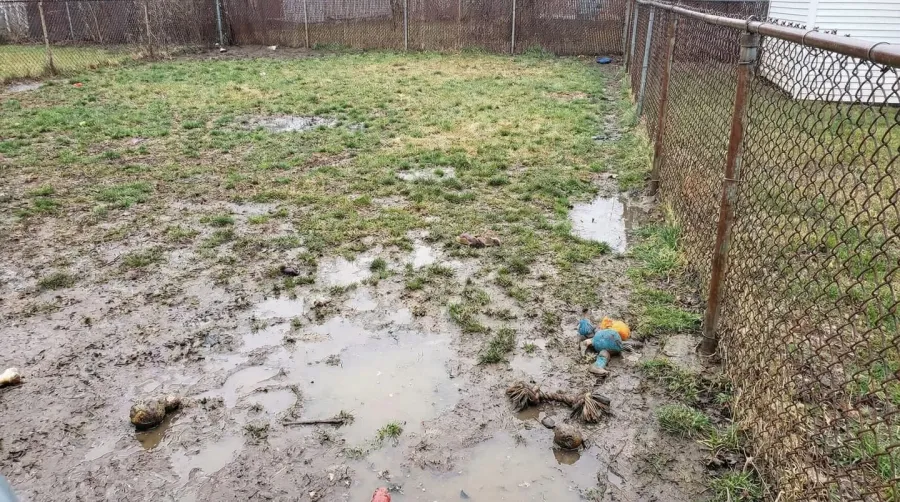
Proper installation makes the difference between a surface that lasts years and one that becomes a muddy mess after the first heavy rain.
Start with planning your drainage. Slope the area slightly away from buildings and toward natural drainage points. Even a 1-2% grade helps water flow away from the surface rather than pooling.
Excavate and prepare the base by removing 4-6 inches of topsoil and installing a compacted sub-base of road base or similar aggregate. This prevents your surface material from sinking into soft soil over time. For additional guidance on proper base preparation, check out our comprehensive guide on crushed stone as a base for playground equipment.
Install edging and weed barrier to contain loose materials and prevent weeds from growing through. Landscape fabric or geotextile works well under gravel, while plastic edging keeps materials in place.
Add your surface material to a depth of 2-4 inches for most loose-fill options. Pea gravel and marble chips work well at 3 inches deep, while wood chips might need 4 inches to provide adequate coverage.
Plan for ongoing maintenance including periodic raking to smooth the surface, topping up material every 2-3 years, and daily waste removal to keep the area sanitary.
Pro Tip: Installing a proper sub-base might seem like extra work, but it prevents the common problem of surface materials gradually disappearing into the ground.
At Hello Gravel, we understand that creating the perfect dog run requires both quality materials and proper planning. Our pea gravel and crushed stone options are specifically selected for durability and pet safety. With our white glove delivery service, you can focus on the installation while we handle getting the right materials to your doorstep. Whether you’re building a small backyard run or a larger facility, we have the aggregates and expertise to help your project succeed. For alternative options, you might also explore bluestone for dog run areas or river rock as a dog run base.
FAQ
Are marble chips safe for dog paws?
Marble chips can be safe for dog paws when you choose smaller, smoother pieces (0.5-1.5 inches) rather than sharp, angular stones. The key is selecting tumbled or rounded marble chips and ensuring proper installation depth. However, they may be less comfortable than pea gravel for dogs that spend long periods running and playing on the surface.
How deep should marble chips be in a dog run?
Marble chips should be installed 2-4 inches deep in a dog run, with 3 inches being optimal for most situations. Larger, more active dogs may benefit from the deeper end of this range. Always install over a compacted base with proper drainage and landscape fabric to prevent the chips from sinking into the soil over time.
Are marble chips better than wood chips for dog runs?
Marble chips offer better long-term durability and drainage compared to wood chips, and they don’t decompose or harbor bacteria. However, wood chips provide a softer surface that many dogs find more comfortable. Wood chips require regular replacement and can retain odors, while marble chips are a one-time investment but may be harder on paws during extended play sessions.
Do marble chips get too hot for dogs in summer?
Light-colored marble chips reflect heat better than dark stones but can still become uncomfortably hot in direct sunlight during summer months. To prevent paw burns, provide shaded areas within the run, ensure access to water, and test the surface temperature with your hand before letting your dog use the area during peak heat hours.