
Best Gravel for French Drains Complete Selection Guide
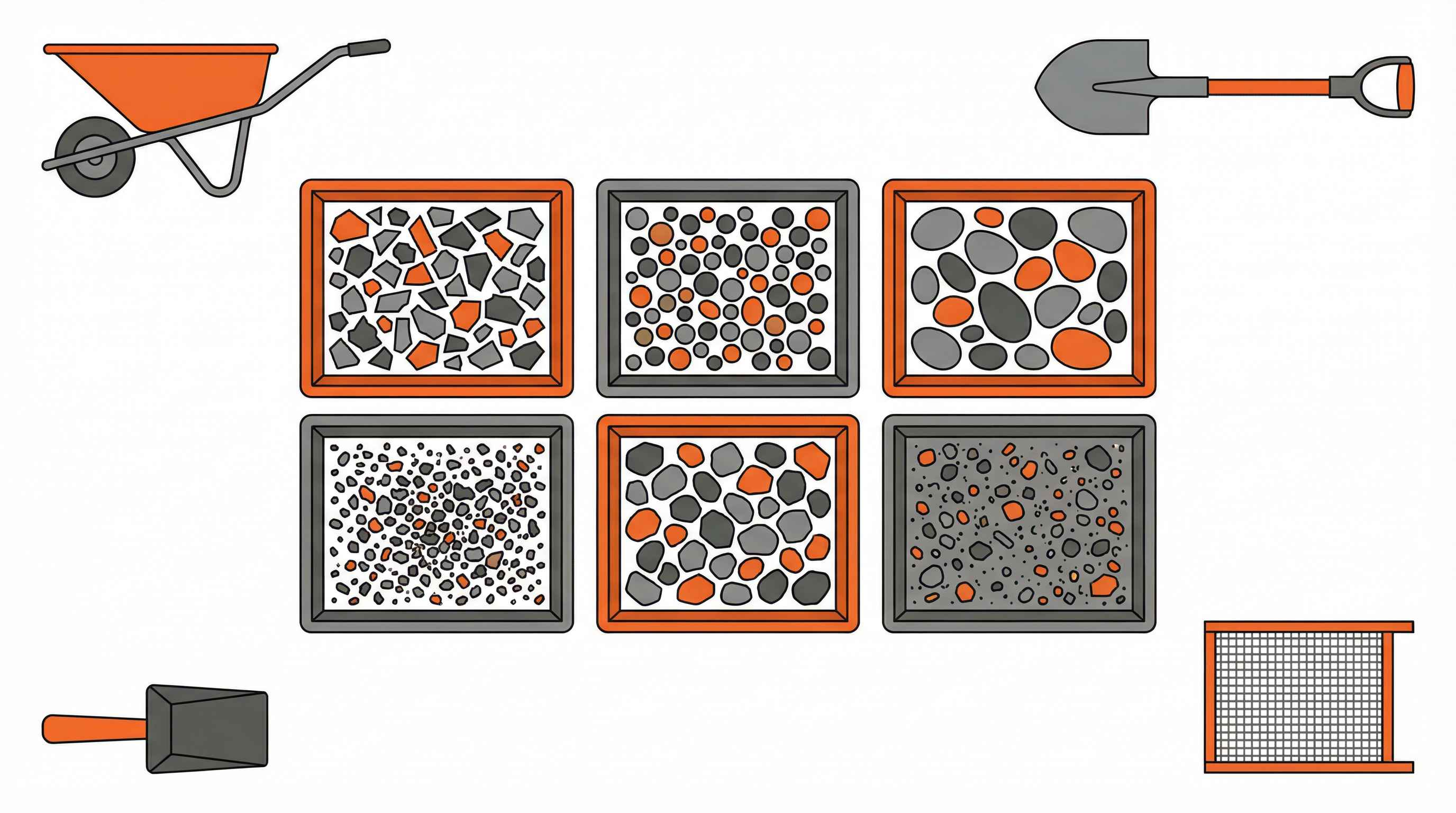

Choosing the right gravel for your French drain can make the difference between a system that works for decades and one that fails within years. The best gravel for French drains is angular crushed stone ranging from ¾ inch to 1½ inches in diameter, as it provides optimal water flow while maintaining structural stability.
French drains rely on gravel to create pathways for water movement while filtering out debris that could clog the perforated pipe. According to drainage experts, the wrong gravel choice accounts for nearly 40% of French drain failures within the first five years.
Quick Answer: Use ¾-inch angular crushed stone for most French drain applications. This size provides excellent drainage while preventing pipe clogging and maintaining long-term stability.
This guide walks you through everything you need to know about selecting gravel for your French drain project, from understanding different gravel types to proper installation techniques.
Understanding French drain fundamentals
A French drain works by collecting water in a gravel-filled trench and directing it away through a perforated pipe. The system relies on gravity to move water from problem areas to designated outlets like storm drains or dry wells.
The gravel serves three critical functions in this system. First, it creates a stable foundation that prevents the pipe from shifting or collapsing under soil pressure. Second, it provides open spaces that allow water to flow freely toward the collection pipe. Third, it acts as a natural filter, preventing soil particles and debris from entering and clogging the drainage pipe.
When water encounters the gravel-filled trench, it seeps through the gaps between stones and flows into the perforated pipe below. The angular shape of quality drainage gravel creates interlocking spaces that maintain their structure over time, ensuring consistent water flow even under the weight of backfilled soil. For more information on how gravel functions in drainage applications, check out our guide to using gravel in drainage systems.
Gravel types and their drainage properties
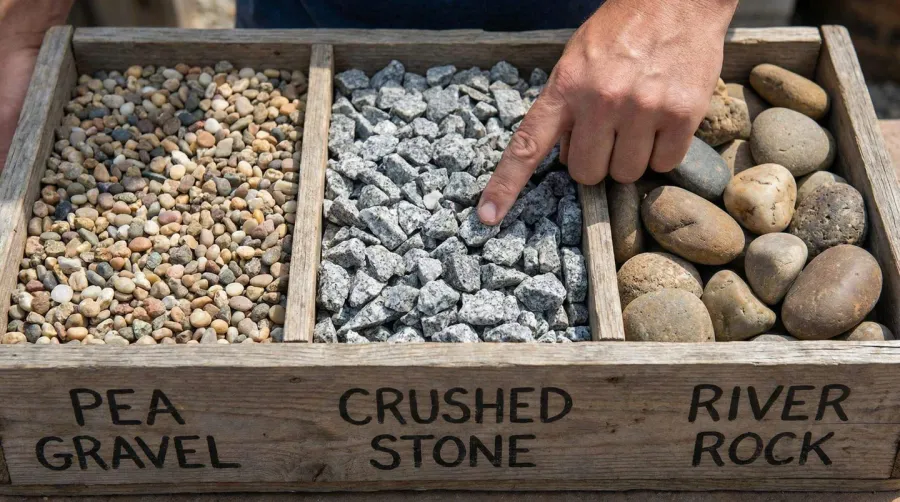
Crushed stone stands out as the top choice for French drains due to its angular edges and consistent sizing. The sharp, irregular surfaces create stable interlocking that resists shifting while maintaining excellent water flow. Hellogravel.com confirms that crushed stone’s durability makes it ideal for heavy water flow situations.
Pea gravel offers a smoother, more decorative option with its rounded edges and smaller size. While it provides good drainage, its smooth surface means less interlocking stability compared to crushed stone. This makes it better suited for lighter drainage applications or areas where aesthetics matter more than maximum performance. Learn more about whether pea gravel drains well for your specific project needs.
River rock brings natural beauty with its larger, smooth stones formed by water erosion. However, its rounded shape and larger size can create gaps that allow soil infiltration, potentially leading to system clogging over time.
The key difference lies in how these materials behave under pressure and water flow. Angular materials like crushed stone maintain their structure better, while rounded materials may shift and compact, reducing drainage efficiency.
| Gravel Type | Size Range | Best Use | Drainage Rating |
|---|---|---|---|
| Crushed Stone | ¾” – 1½” | Heavy drainage | Excellent |
| Pea Gravel | ¼” – ½” | Light drainage | Good |
| River Rock | 1″ – 3″ | Decorative | Fair |
Selecting the right gravel size and quality
Size matters significantly in French drain performance. The ideal gravel size ranges from ¾ inch to 1½ inches in diameter. This range provides the perfect balance between water flow and structural stability. Smaller gravel can wash away or compact, while larger stones create gaps that allow soil infiltration. For comprehensive guidance on selecting the appropriate size, visit our article on what is the best gravel size for drainage.
Shape plays an equally important role. Angular gravel with rough, irregular edges interlocks better than rounded stones, creating a more stable drainage medium. The rough texture also provides more surface area for water to cling to as it moves through the system.
Quality indicators include cleanliness and consistency. Choose washed gravel that’s free from excess fines like sand and silt. These fine particles can clog the spaces between larger stones, dramatically reducing water flow. According to hellogravel.com, gravel with less than 5% fines content performs best in drainage applications.
Pro Tip: Test gravel quality by pouring water through a small sample. Good drainage gravel should allow water to flow through quickly without creating standing pools.
Installation best practices for optimal performance
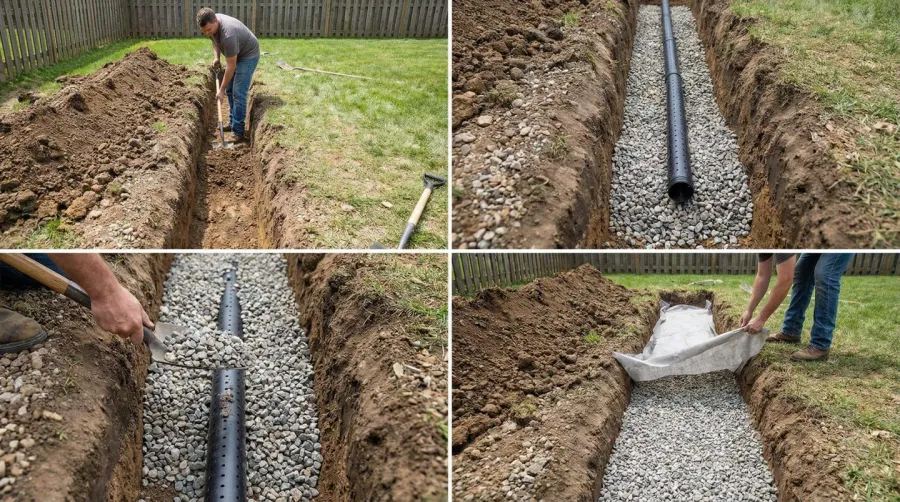
Proper installation starts with excavating a trench that slopes at least 1% away from the problem area. This means a one-foot drop for every 100 feet of length. The trench should be wide enough to accommodate the pipe plus 6 inches of gravel on each side.
Begin by laying landscape fabric in the trench to separate soil from gravel. Add 2-3 inches of crushed stone as a base layer, then place the perforated pipe with holes facing down. This positioning prevents debris from entering while allowing water collection from below.
Cover the pipe with gravel, maintaining at least 2 inches of clearance above the pipe. Fill the trench to within 6 inches of ground level, then fold the landscape fabric over the gravel before backfilling with soil. This creates a complete barrier against soil infiltration.
Testing the system immediately after installation helps identify any issues before final backfilling. Pour water at various points along the drain and observe flow patterns to ensure proper function. For additional insights on drainage systems, explore our comprehensive guide on the best gravel for drainage.
Selecting quality gravel and installing it properly ensures your French drain will protect your property from water damage for years to come. The investment in the right materials pays off through reliable performance and reduced maintenance needs. Remember that while the initial cost of premium crushed stone may be higher, its superior drainage properties and longevity make it the most cost-effective choice for serious drainage projects. If you’re considering different types of gravel for construction projects beyond drainage, understanding these fundamental principles will serve you well across various applications.
FAQ
What size gravel is best for a French drain?
The ideal gravel size for French drains is ¾ inch to 1½ inches in diameter, such as #57 crushed stone. This size range provides optimal water flow while preventing pipe clogging and maintaining structural stability. Smaller gravel can wash away or compact, while larger stones create gaps that allow soil infiltration.
Should I use crushed stone or pea gravel for my French drain?
Crushed stone is the superior choice for French drains due to its angular edges that create stable interlocking and excellent water flow. Pea gravel, while more decorative, has rounded edges that provide less stability and may shift or compact over time. Use crushed stone for heavy drainage applications and pea gravel only for light decorative drainage where aesthetics are prioritized.
Do I need landscape fabric with my French drain gravel?
Yes, landscape fabric is essential for French drain success. It should be laid in the trench before adding gravel to separate soil from the drainage medium, then folded over the gravel before backfilling with soil. This creates a complete barrier against soil infiltration that could clog the system and reduce drainage efficiency.
How much gravel do I need for my French drain?
Calculate gravel needs by determining your trench volume and multiplying by 1.5 to account for settling and proper coverage. For example, a 100-foot trench that’s 6 inches wide and 18 inches deep requires approximately 10 cubic yards of gravel. The gravel should extend at least 6 inches on each side of the pipe and maintain 2 inches of clearance above it.