
Best Gravel for Dog Runs: Safe, Comfortable Base Guide 2026
Guide handoff
Want help applying this guide to your project?
Share your ZIP and what you need help with. We'll use this guide as context when we follow up.
- 1 This guide gives us the context you were reading.
- 2 Ask about pricing, material choice, delivery timing, or quantity.
- 3 Keep it broad if you are still figuring out the project.
Picture this: you let your dog out into the backyard after a rainy day, and within minutes they’re tracking mud all over your house. The grass is torn up, there are puddles everywhere, and that familiar smell of wet soil and dog waste is starting to take over. If this sounds familiar, you’re not alone—and there’s a solution that thousands of dog owners have discovered.
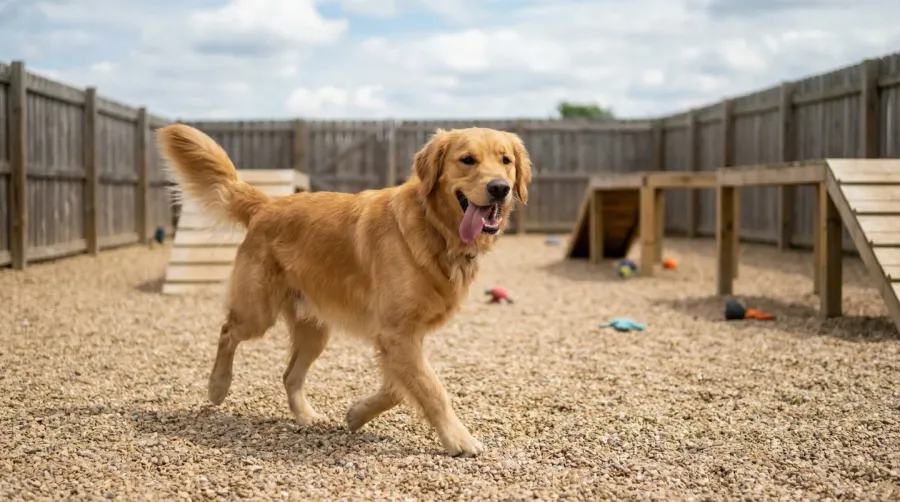
Yes, you can absolutely use gravel as a dog run base, but choosing the right type is crucial for your dog’s comfort and safety. The best options are rounded, pea-sized stones that provide excellent drainage while being gentle on paws. When installed properly with the right depth and base preparation, gravel creates a clean, low-maintenance surface that eliminates mud and reduces odors.
Quick Answer: Pea gravel (3/8 to 1/2 inch rounded stones) installed 2-3 inches deep over a compacted base is the most popular choice for dog runs, offering the perfect balance of comfort, drainage, and easy maintenance.
Does gravel hurt dogs’ feet?
This is probably your biggest concern, and it’s completely valid. The truth is, some gravel can be uncomfortable for dogs, but the right type won’t hurt their paws at all.
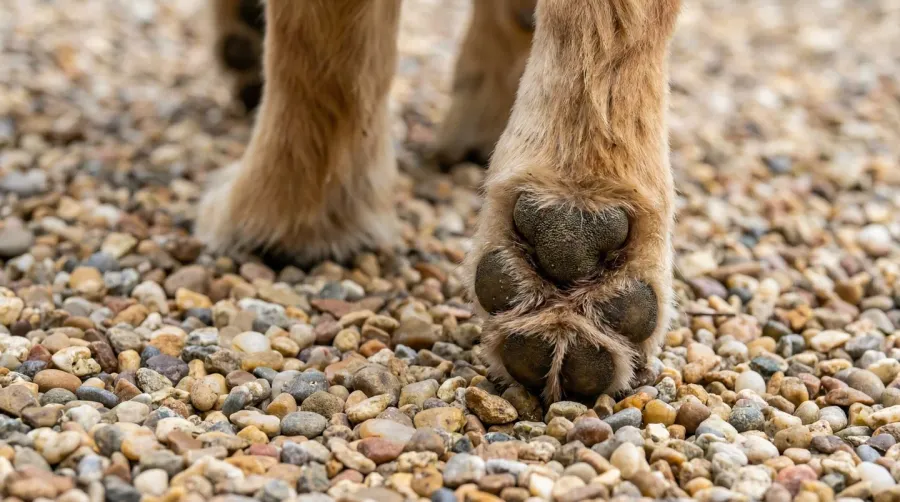
Rounded, smooth stones like pea gravel are comfortable for most dogs because they don’t have sharp edges that can poke or scrape. Think of it like walking on smooth river rocks versus walking on broken concrete—the shape makes all the difference. Most dogs adapt to a well-designed gravel surface within a few days and often prefer it to muddy grass.
However, you should consider your specific dog’s needs. Puppies with tender paws, senior dogs with arthritis, or dogs recovering from paw injuries might need extra consideration. For these situations, you can create mixed surfaces by adding rubber mats in resting areas or choosing slightly smaller, softer stones.
The key factors for paw comfort are stone size, shape, and depth. Stones that are too large can be unstable underfoot, while stones that are too small might get stuck between toes. The sweet spot is typically 3/8 to 1/2 inch rounded stones installed at the proper depth.
Choosing the right gravel type for your dog run
Not all gravel is created equal when it comes to dog comfort and safety. Let’s break down your main options so you can make the best choice for your furry friend.
Pea gravel and washed rock are your best friends here. These materials consist of small, naturally rounded stones that have been tumbled smooth. They typically range from 3/8 to 1/2 inch in size, making them large enough that dogs won’t accidentally ingest them but small enough to be comfortable underfoot. The rounded edges mean no sharp points digging into paw pads. If you’re looking for more information on using pea gravel for a shed foundation, similar principles of proper depth and drainage apply.
Crushed stone, while excellent for structural purposes like driveways, isn’t ideal as a top surface for dog runs. The angular, sharp edges created during the crushing process can be rough on paws. However, crushed stone works perfectly as a base layer under your pea gravel, providing stability and drainage.
When comparing to other surface options, gravel offers unique advantages. Wood mulch can harbor bacteria and needs frequent replacement, concrete gets hot in summer and cold in winter, and artificial turf can trap odors. Gravel drains immediately, stays relatively temperature-neutral, and allows for easy waste removal.
Pro Tip: Ask your supplier specifically for “washed” pea gravel—this means it’s been cleaned of dust and fine particles that could otherwise create a muddy mess when wet.
Installation depth and preparation essentials
Getting the depth right is crucial for both comfort and long-term performance. Too shallow, and you’ll have shifting stones and poor drainage. Too deep, and it becomes unstable and expensive.
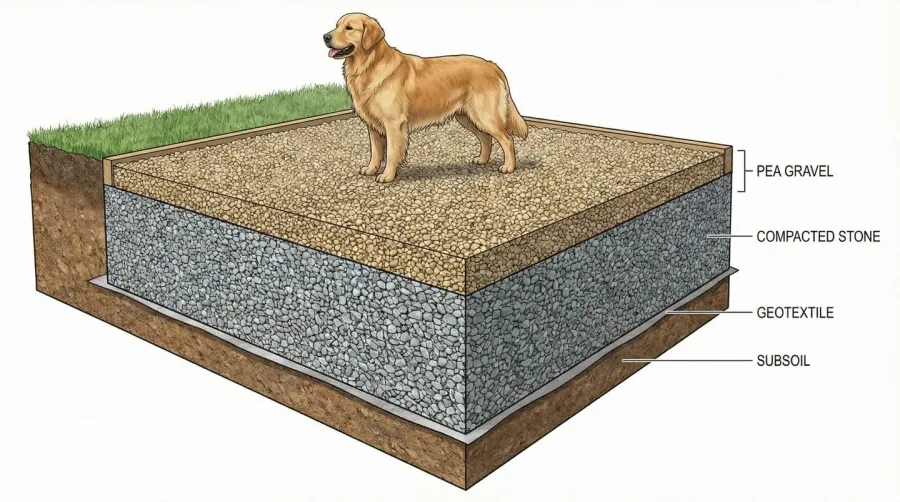
Most successful dog runs use a total system depth of 5-7 inches. This typically breaks down to 3-4 inches of compacted base material (like crusher dust or road base) topped with 2-3 inches of pea gravel. This combination gives you the stability of a solid foundation with the comfort of a smooth surface.
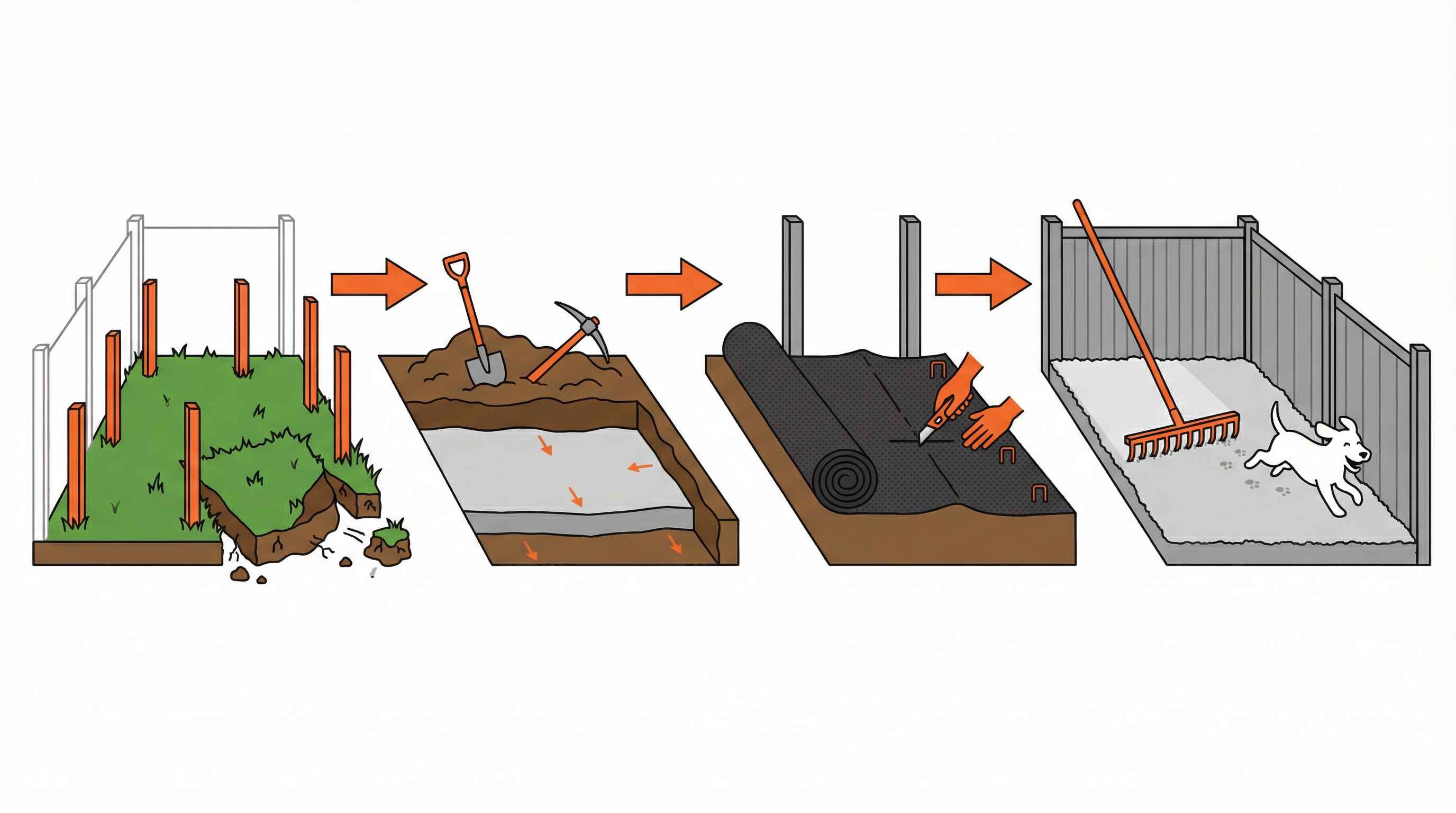
For the base preparation, you’ll want to excavate the area, removing any organic material like grass or roots. Install landscape fabric to prevent weeds, then add your base layer in thin lifts, compacting each one. The base should have a gentle slope away from your house or any structures to ensure proper drainage.
Larger dogs or high-traffic areas might benefit from slightly deeper base layers, especially if you live in an area with heavy rainfall or clay soil. The investment in proper depth pays off in reduced maintenance and a surface that stays stable year after year. For those considering alternative materials, you might also explore using decomposed granite as a base for a dog run area or river rock for a dog run area.
| Material | Typical Size | Recommended Depth | Best Use |
|---|---|---|---|
| Pea Gravel | 3/8″ – 1/2″ | 2-3 inches | Top surface layer |
| Crusher Dust | Fine particles | 3-4 inches | Compacted base |
| Washed Rock | 1/2″ – 3/4″ | 2-4 inches | Alternative surface |
Maintenance and cleaning your gravel dog run
One of the biggest advantages of a gravel dog run is how easy it is to keep clean, but there are some simple routines that will keep it working perfectly.
Daily waste pickup is your most important task. Solid waste sits on top of the gravel surface, making it easy to scoop with a regular pooper scooper. Urine drains right through, which is why gravel runs stay much cleaner and less smelly than grass or dirt areas.
For deeper cleaning, occasional raking helps redistribute the stones and break up any compacted areas where your dog likes to lie down. A garden hose can wash away dust or debris, and the excellent drainage means the surface dries quickly.
Every year or two, you might need to add a thin layer of fresh gravel to replace stones that have worked their way into the base or been tracked out of the area. This top-up is usually minimal and much less expensive than replacing other surface materials.
If odors become an issue in heavily used spots, pet-safe enzyme cleaners can be applied and will drain through the gravel system. The key is that unlike solid surfaces, you’re not just pushing the problem around—the drainage actually removes it.
Maintenance Reality Check: Most dog owners find that a well-built gravel run requires less weekly maintenance than a grass yard, with no mowing, fertilizing, or reseeding needed.
Getting the right materials for your project
Now that you understand what makes a great dog run surface, the next step is sourcing quality materials that meet your specific needs.
At Hello Gravel, we specialize in pet-friendly aggregates that work perfectly for dog run applications. Our pea gravel and washed rock options are specifically sized and cleaned for comfort and drainage. We can help you calculate the right quantities based on your area size and provide guidance on choosing between different stone types based on your dog’s size and activity level. If you’re also considering other materials like bluestone for a base for a dog run area or marble chips for a dog run area, we can help you compare options.
The convenience factor matters too. Rather than making multiple trips to different suppliers or trying to transport heavy materials yourself, we deliver directly to your location. Our team can also provide specific advice on installation techniques and answer questions about depth requirements for your local soil conditions.
Whether you’re building a small potty area or a large play space, having the right materials delivered on schedule makes your project much more manageable. We work with dog owners across the country who want to create comfortable, clean outdoor spaces for their pets.
Getting a quote is straightforward—just share your project dimensions and location, and we’ll provide pricing for both the base materials and surface gravel, along with delivery scheduling that works for your timeline.
Ready to give your dog the clean, comfortable outdoor space they deserve? A well-designed gravel dog run eliminates muddy paws, reduces yard odors, and creates a surface that’s easy to maintain year-round. With the right materials and proper installation, you’ll wonder why you didn’t make the switch sooner.
Contact Hello Gravel today for a personalized quote on pet-friendly aggregates. Our team understands the specific requirements for dog run surfaces and can help you choose the perfect materials for your project size, budget, and local conditions.
FAQ
Does gravel hurt dogs’ feet?
Gravel doesn’t have to hurt dogs’ feet when the right type is chosen and properly installed. Rounded pea gravel (3/8 to 1/2 inch) is generally comfortable for most dogs, while sharp, angular stones or very large chunks can cause discomfort. The key is choosing smooth, appropriately-sized stones and installing them at the proper depth over a compacted base.
What type of gravel is safest for dogs?
Pea gravel and washed rock are the safest options for dogs because they consist of small, naturally rounded stones with smooth edges. These materials typically range from 3/8 to 1/2 inch in size, making them large enough that dogs won’t accidentally ingest them but small enough to be comfortable underfoot. Avoid crushed stone with sharp, angular edges for the top surface layer.
How deep should gravel be in a dog run?
For optimal comfort and drainage, install 3-4 inches of compacted base material topped with 2-3 inches of pea gravel or small crushed stone. This layered approach provides a stable foundation that won’t shift under your dog’s weight while ensuring proper drainage to prevent mud, puddles, and odors. The total system depth should be 5-7 inches.
How do you keep a gravel dog run clean and odor-free?
Daily waste pickup is essential since solid waste sits on top of the gravel surface for easy removal. The excellent drainage allows urine to pass through, preventing odor buildup. For deeper cleaning, occasionally rake the surface to redistribute stones and use a garden hose to wash away debris. Pet-safe enzyme cleaners can be applied to heavily used areas and will drain through the system.