
Best Fill Dirt for Holes in Yard 2026
Guide handoff
Want help applying this guide to your project?
Share your ZIP and what you need help with. We'll use this guide as context when we follow up.
- 1 This guide gives us the context you were reading.
- 2 Ask about pricing, material choice, delivery timing, or quantity.
- 3 Keep it broad if you are still figuring out the project.
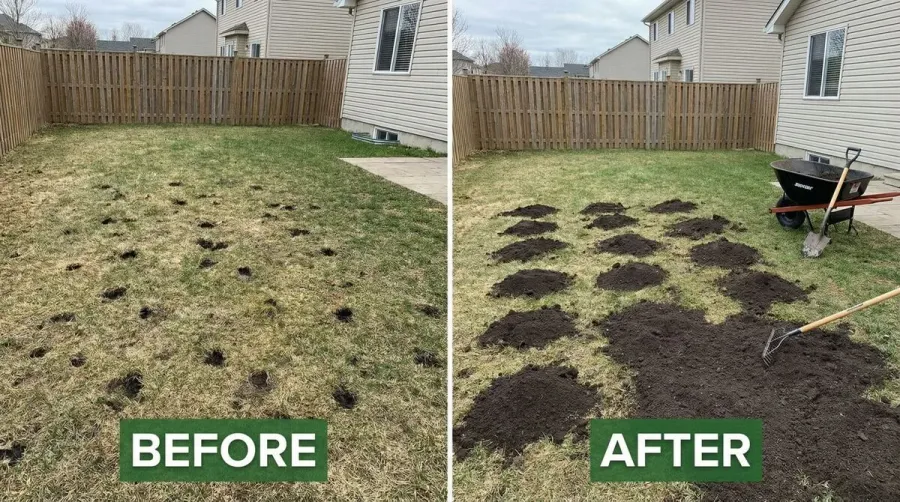
Holes in your yard from animals, erosion, or digging projects? Fill dirt is the cheapest, most stable fix that won’t settle over time like topsoil. You can transform those unsightly holes into level ground this weekend with the right approach and materials.
Quick Answer: Fill dirt costs 30-50% less than topsoil and provides superior stability because it lacks organic matter that decomposes and causes settling.
Whether you’re dealing with small animal burrows or large excavation holes, fill dirt offers the most reliable solution for permanent repairs. According to hellogravel.com, this subsoil material compacts tightly and maintains its structure for years without the shifting problems common with other materials.
What makes fill dirt perfect for yard holes
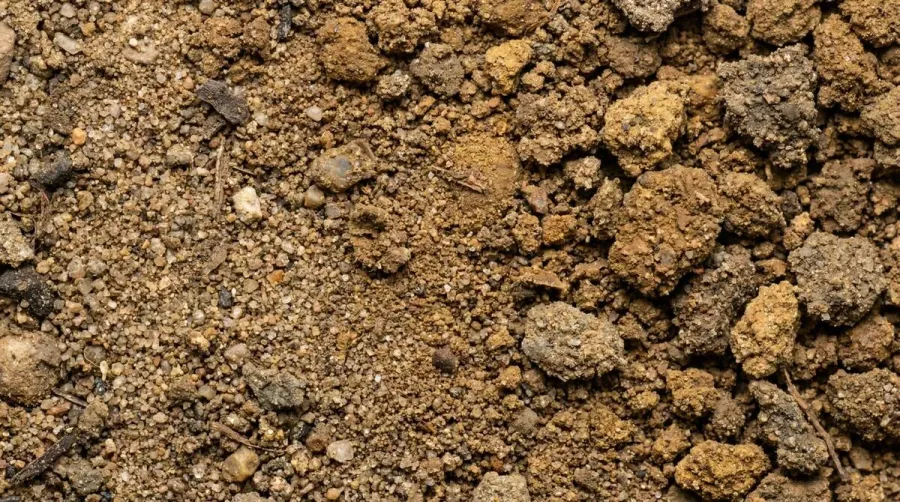
Fill dirt consists of subsoil layers found beneath topsoil, typically containing sand, silt, and clay without organic materials. This composition gives it unique advantages for hole filling that other materials simply can’t match.
The absence of organic matter means fill dirt won’t decompose and create new depressions in your yard. When leaves, grass clippings, or other organic materials break down, they leave empty spaces that cause soil to settle. Fill dirt eliminates this problem entirely.
Its high compaction ability creates a solid, stable foundation that supports foot traffic and lawn equipment without shifting. You can walk on properly compacted fill dirt immediately after installation, unlike loose topsoil that needs time to settle.
Fill dirt vs other materials
| Material | Cost per Cubic Yard | Settling Risk | Best For |
|---|---|---|---|
| Fill Dirt | $15-25 | Very Low | Permanent holes, foundations |
| Topsoil | $25-40 | High | Planting areas, gardens |
| Sand | $20-30 | Medium | Drainage, temporary fixes |
Fill dirt consistently outperforms alternatives for structural applications. Sand drains well but lacks binding properties, making it unsuitable for areas that need stability. Topsoil contains organic matter that decomposes, creating the exact settling problems you’re trying to avoid.
The cost difference becomes significant for larger projects. A typical yard hole requiring 5 cubic yards of material costs $75-125 with fill dirt versus $125-200 with topsoil, according to hellogravel.com.
Pro Tip: Clean fill dirt free from debris and contaminants provides the best results and meets most local building codes for residential use.
Step-by-step hole filling process
Start by measuring your hole’s length, width, and depth to calculate the cubic yards needed. Multiply these dimensions and divide by 27 to convert cubic feet to cubic yards. Add 10% extra for compaction allowance.
Clear any debris, loose soil, or vegetation from the hole. This creates a clean surface for proper bonding between existing soil and new fill dirt. Remove any organic materials that could decompose later.
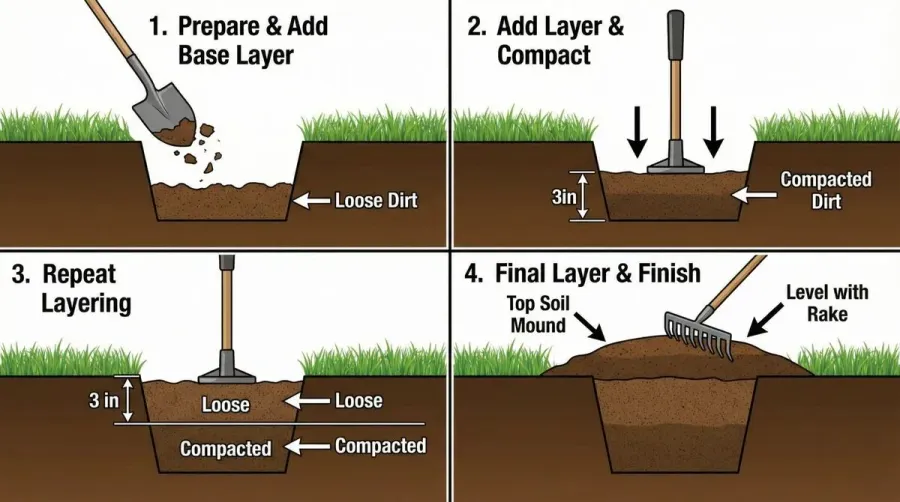
Add fill dirt in 6-inch layers, spreading evenly with a rake or shovel. Compact each layer thoroughly using a tamper or the back of your shovel. This layered approach prevents air pockets and ensures uniform density throughout the fill.
Level the final surface slightly above surrounding grade to account for natural settling. Use a rake to create smooth transitions between filled areas and existing lawn. The surface should blend seamlessly with your yard’s natural contours.
Getting quality fill dirt delivered
Hello Gravel provides nationwide delivery of premium fill dirt with transparent pricing and reliable service. Their online ordering system eliminates the hassle of calling multiple suppliers for quotes, and you can calculate exact quantities using their material calculator.
Quality matters significantly when choosing fill dirt suppliers. Clean fill dirt should be free from construction debris, chemicals, and excessive organic matter. Reputable suppliers like Hello Gravel source their materials responsibly and provide consistent quality across all deliveries.
Delivery timing depends on your location and order size, but most residential orders arrive within 3-5 business days. Bulk deliveries often include placement services, where drivers can dump materials close to your project area for easier handling.
Cost Savings: Ordering 10+ cubic yards typically reduces per-yard costs by 15-20% compared to smaller quantities, making larger projects more economical.
The convenience of professional delivery becomes especially valuable for larger holes or multiple repair areas. Professional drivers understand proper placement techniques and can position materials to minimize your manual labor while protecting your existing landscape.
Fill dirt transforms problem areas into stable, usable space that enhances your property’s appearance and safety. With proper installation techniques and quality materials, your yard repairs will last for decades without requiring additional maintenance or touch-ups.
FAQ
What is the best dirt to fill holes in yard?
Fill dirt is the best choice for filling holes in your yard because it’s highly compactable, free of organic matter that prevents settling, and costs 30-50% less than topsoil. Unlike topsoil which contains organic materials that decompose and cause shifting, fill dirt creates a stable, permanent foundation that won’t develop new depressions over time.
Can you use topsoil to fill holes in yard?
While topsoil can fill shallow holes, it’s not recommended for deep holes as it contains organic matter that decomposes and causes settling. For best results, use fill dirt as the base layer for stability, then add a thin layer of topsoil on top if you plan to grow grass. This approach combines the structural benefits of fill dirt with the nutrient content needed for plant growth.
How much fill dirt do I need to fill a hole in my yard?
To calculate fill dirt needed, measure the hole’s length, width, and depth in feet, then multiply these dimensions and divide by 27 to convert to cubic yards. Add 10% extra for compaction allowance. For example, a hole that’s 6 feet long, 4 feet wide, and 2 feet deep would need approximately 2 cubic yards of fill dirt including the compaction buffer.
What’s the cheapest way to fill holes in yard?
Fill dirt is the most economical option at $15-25 per cubic yard compared to topsoil at $25-40 per cubic yard. For larger projects requiring 10+ cubic yards, bulk ordering can reduce costs by 15-20%. Getting quotes from suppliers like Hello Gravel for bulk delivery minimizes both material and transportation costs while ensuring quality clean fill dirt.