
Best Boulders for Parking Lots Complete Guide to Choosing the Right Stone
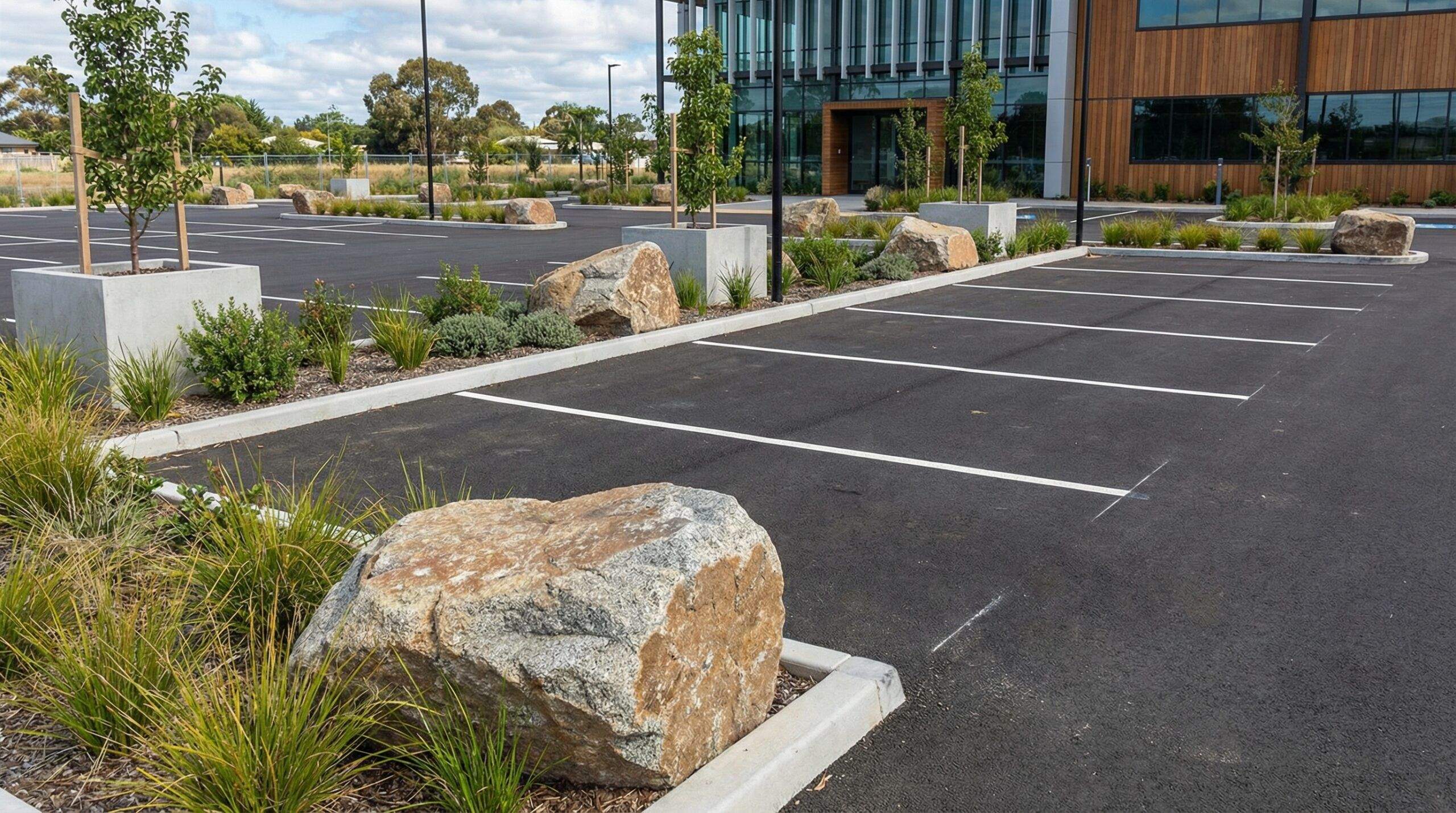
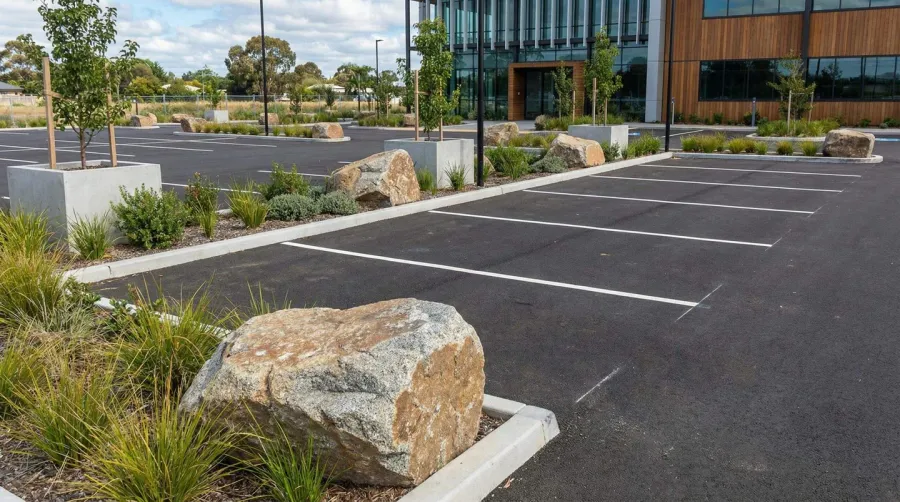
Choosing the right boulders for your parking lot can transform an ordinary space into an attractive, functional area that serves multiple purposes. Whether you need traffic control, property protection, or aesthetic enhancement, the type of boulder you select makes all the difference in achieving your goals.
Granite boulders are typically the best choice for parking lots due to their exceptional durability and weather resistance. Limestone offers excellent drainage properties, while basalt provides superior impact resistance for high-traffic areas. The key is matching boulder characteristics to your specific needs and local climate conditions.
Pro Tip: Most parking lot boulder installations require stones between 18-36 inches in diameter for optimal visibility and vehicle deterrence while maintaining aesthetic appeal.
Why parking lots need boulders
Boulders serve three primary functions in parking lot design that go beyond simple decoration. Understanding these purposes helps you make better decisions about placement and boulder type selection.
Traffic control and safety represents the most critical function. Strategically placed boulders guide vehicle movement, prevent cars from entering restricted areas, and protect pedestrian walkways. They act as natural barriers that are more visually appealing than concrete posts or metal barriers.
Property protection becomes essential when your parking lot borders landscaped areas, buildings, or sensitive infrastructure. Boulders create a protective buffer zone that prevents accidental vehicle damage while maintaining an attractive appearance.
Environmental benefits include erosion control and improved drainage patterns. Well-positioned boulders help manage stormwater runoff and prevent soil erosion around your parking area, which can save significant maintenance costs over time. For more information on how different materials can help with erosion control structures, explore our comprehensive guides.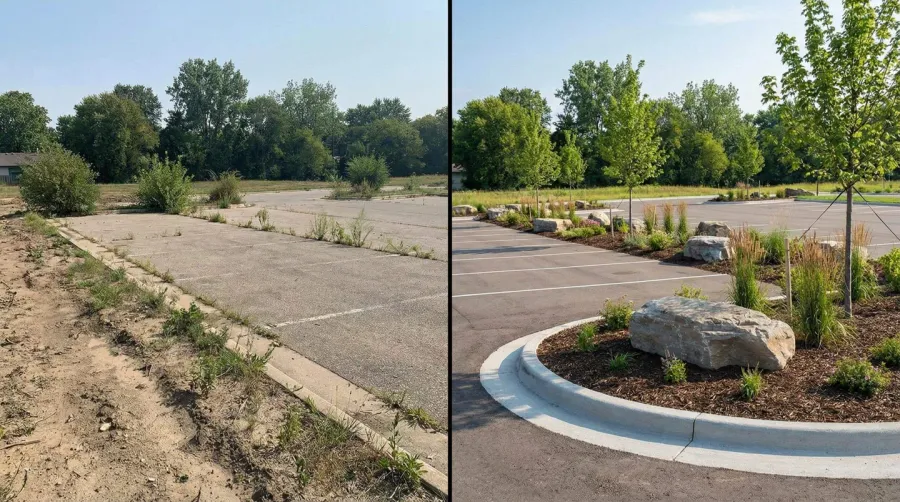
Boulder types and their best applications
Different boulder materials offer distinct advantages depending on your specific parking lot requirements and local conditions.
Granite boulders excel in high-traffic commercial parking lots due to their incredible durability and resistance to weathering. They maintain their appearance for decades with minimal maintenance and come in various colors including gray, pink, and black. Granite works particularly well in areas with extreme temperature fluctuations. If you’re considering granite for other projects, learn more about using granite for retaining wall base projects.Limestone boulders provide excellent water absorption and drainage properties, making them ideal for parking lots in areas with heavy rainfall. Their natural colors blend well with most architectural styles, and they’re often more cost-effective than granite options. Discover additional applications for limestone in garden paths and other landscaping projects.Sandstone boulders offer unique textures and warm color tones that create inviting environments. They work best in moderate climates and are perfect for retail parking areas where aesthetic appeal is particularly important.Basalt boulders deliver maximum impact resistance and create dramatic visual statements. Their dark color and dense composition make them excellent choices for urban parking lots and areas requiring superior durability. For insights on basalt’s versatility, check out our guide on basalt in erosion control structures.
Key Insight: Granite and basalt boulders typically last 50+ years in parking lot applications, while limestone and sandstone may require replacement after 20-30 years depending on climate conditions.
Essential factors for boulder selection
Selecting the right boulders requires careful consideration of several interconnected factors that affect both performance and appearance.
Size and placement strategy directly impacts functionality. Boulders between 18-24 inches work well for light traffic control, while 30-36 inch stones provide better vehicle deterrence. Spacing should allow 6-8 feet between boulders for normal traffic flow while preventing vehicles from passing through.
Material durability varies significantly between boulder types. Consider your local climate conditions, expected traffic volume, and maintenance capabilities. Areas with freeze-thaw cycles need highly durable materials like granite, while moderate climates can accommodate softer stones.
Cost considerations include initial purchase price, transportation costs, and long-term maintenance requirements. While granite costs more upfront, its longevity often makes it more economical over time. Factor in local availability to minimize transportation expenses. For help with delivery logistics, explore our ultimate guide to getting a load of rocks delivered.
Visual integration ensures your boulders complement existing architecture and landscaping. Consider color coordination with building materials and surrounding vegetation to create a cohesive appearance.
| Boulder Type | Durability | Cost Range | Best Climate | Maintenance |
|---|---|---|---|---|
| Granite | Excellent | $$$ | All climates | Minimal |
| Limestone | Good | $$ | Moderate | Low |
| Sandstone | Moderate | $$ | Dry/moderate | Moderate |
| Basalt | Excellent | $$$ | All climates | Minimal |
Installation and maintenance best practices
Proper installation ensures your boulders remain stable, safe, and attractive throughout their service life.
Foundation preparation starts with excavating 6-12 inches deep depending on boulder size. Create a stable base using compacted gravel or crushed stone to prevent settling and movement. This foundation work is crucial for long-term stability. Learn more about what type of aggregate base is best for foundations to ensure proper installation.
Strategic placement requires considering traffic patterns, sight lines, and emergency vehicle access. Position boulders to guide traffic naturally while maintaining clear visibility for drivers. Avoid creating blind spots or impeding snow removal operations.
Ongoing maintenance involves periodic inspection for stability, cleaning to remove debris and stains, and vegetation management around boulder bases. Most boulder installations require minimal maintenance, but regular attention prevents small issues from becoming major problems.
Safety Note: Always verify underground utilities before excavation and ensure boulder placement doesn’t interfere with drainage systems or emergency vehicle access routes.
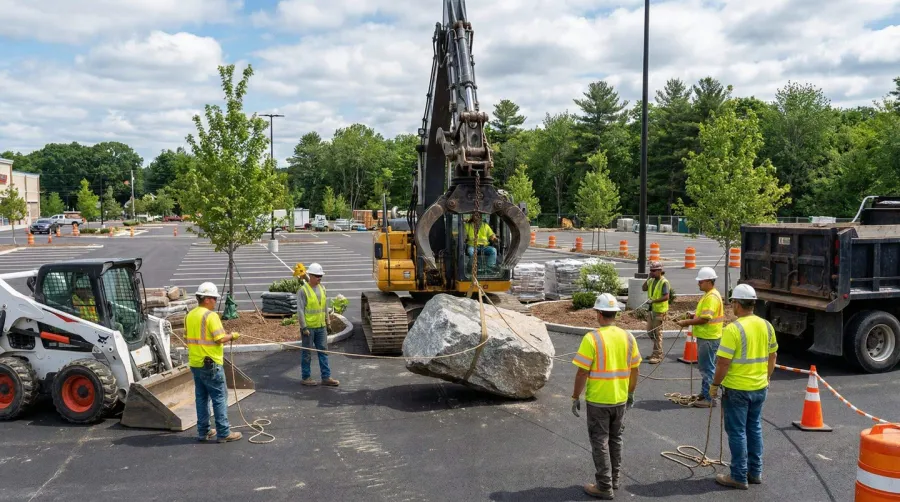
Choosing the best boulders for your parking lot ultimately depends on balancing durability requirements, aesthetic preferences, and budget constraints. Granite and basalt offer superior longevity for high-traffic areas, while limestone and sandstone provide cost-effective solutions for moderate-use applications. For additional insights on boulder applications, explore our guide on what type of boulders are best for roadways. Proper installation and strategic placement ensure your boulder investment delivers years of reliable service while enhancing your property’s appearance and functionality.
FAQ
What size boulders are best for parking lot barriers?
For effective vehicle deterrence, use boulders between 24-36 inches in diameter. These provide optimal visibility for drivers while creating a substantial barrier. Smaller 18-24 inch boulders work well for light traffic control and decorative edges, while larger 30-36 inch stones offer superior protection for high-traffic areas.
Which boulder material lasts longest in parking lots?
Granite and basalt boulders offer the longest lifespan, typically lasting 50+ years in parking lot applications. Granite excels in areas with freeze-thaw cycles due to its exceptional durability and weather resistance. Limestone and sandstone may require replacement after 20-30 years depending on climate conditions, but offer good value for moderate-use applications.
How much do parking lot boulders cost?
Boulder costs vary by material and size. Granite typically ranges from $200-500 per boulder, limestone costs $150-350, while sandstone and basalt fall in the $175-400 range. Factor in delivery costs ($50-150) and installation ($75-200 per boulder). While granite costs more upfront, its 50+ year lifespan often makes it more economical than cheaper alternatives.
How deep should parking lot boulders be installed?
Excavate 6-12 inches deep depending on boulder size, with larger stones requiring deeper foundations. Create a stable base using compacted gravel or crushed stone to prevent settling and movement. For maximum stability, bury approximately one-third of the boulder’s height and ensure proper drainage around the foundation to prevent frost heaving.